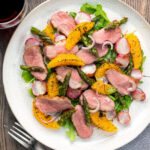
Duck Breast Salad with Orange Recipe
This super quick duck breast salad can be on your plate in just 30 minutes and has a few unusual new techniques to play with!
Servings 2 Servings
Calories 628kcal
Ingredients
- 2 Small Duck Breasts
- 1 teaspoon Fennel Seeds
- ½ teaspoon Black Pepper (Plus extra to taste)
- ½ teaspoon Coarse Sea Salt (Plus extra to taste)
- 12 Small Radishes
- 24 Asparagus Tips
- 1 Medium Orange
- 2 Handfuls Rocket (Arugula)
- 2 tablespoon Olive Oil
Instructions
- Ensure the skin of the duck breast is dry, and then cut a cross-hatch pattern (1cm) in the skin, making sure not to cut the flesh.
- Place the coarse sea salt, fennel seeds and black pepper in a spice grinder or pestle and mortar and grind.Rub this fennel mix into both sides of the duck breasts.
- Place the duck breasts skin side down into a cold 28cm or 11" frying pan or skillet (do not use non-stick). Turn on the heat to a low-medium temperature and allow it to sit for 8-12 minutes.
- Peel and cut the red onion in half, and then slice as finely as you can into half-moon shapes.
- Cut the top and bottom from the orange and then peel it with a sharp knife, removing the skin just below the pith.Cut each segment from the orange by sliding a sharp knife alongside each membrane.
- Squeeze the orange juice from the leftover orange "carcass" into a bowl.
- By now, the duck breast should have started to give off some fat; if there is a lot, pour it off into a bowl, and we will be using it later.
- Add three times as much oil as you have orange juice from the leftover orange and whisk, season with salt and pepper to taste.
- After the duck is nicely golden on the skin side, flip it over and cook it until your desired level of "done". I remove the duck at 53-54°C or 127°F and rest for 5-10 minutes tented in foil.*This results in pink duck. If you want temperatures for other levels of "doneness", see my FAQ section*
- Cut the greens from the radish and then cut them in half and place them into a small roasting pan with the asparagus tips and pour over the duck fat. Place the pan in a hot oven at 220°C or 450°F and cook for the time it takes for the duck to rest.
- I like to sear the orange segments to add a slightly bitter edge. I use a blow torch, but sliding them under a hot grill or broiler works just as well.
- Once the duck has rested, thinly slice it.
- Dress the rocket and red onion with the orange juice and oil mix and add to a plate.
- Scatter over the roasted radishes, asparagus and seared orange segments.
- Finally, top with the duck and serve.
Nutrition
Serving: 1 | Calories: 628kcal | Carbohydrates: 18g | Protein: 64g | Fat: 34g | Saturated Fat: 8g | Polyunsaturated Fat: 23g | Cholesterol: 326mg | Sodium: 1106mg | Fiber: 6g | Sugar: 9g
