Greek Pork Tigania with Leeks and Peppers
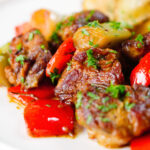
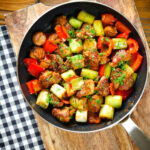
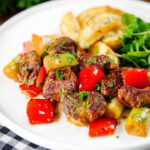
Greek pork tigania is a beautiful recipe that rocks tender chunks of shoulder or neck cooked with mustard, lemon, herbs and white wine.
This dish is often referred to as being "fried", but it combines frying with simmering in liquid. It's very easy, requires no special skills or kit and will cook in around 75 minutes.

Greek Fried Pork Chunks with Leeks and Peppers
It would seem that Greek flavours have been a theme for me this year, with well-known dishes like keftedes, Greek roasted chicken and lemon potatoes and lamb souvlaki joining less well-known offerings like youvetsi, If you like this, you will love my latest Kapama and kokkinisto.
Tigania falls into the lesser well-known category of Greek food, but it is magic: large pork chunks browned in olive oil before being simmered in mustard and water with loads of herbs.
The cooking technique is unusual to some extent: liquid is added, then reduced to nothing, before veggies are added and then more liquid; this time it's white wine.
Then that is reduced to nothing, and the meat and veggies fry again, resulting in beautifully cooked pork and perfect vegetables.
Wine aside, this dish is really rather frugal, leaning on pork shoulder or neck, two of the cheaper cuts of pork. However, it genuinely tastes like a "million dollars".
I love digging out obscure dishes, sometimes it is easy to see why they are obscure. This one, however, I have no idea why tigania it is little heard of outside of Greece, because it is exceptional!

Frequently Asked Questions
What cuts of pork can I use?
Pork shoulder or pork neck is the best cut of meat to use in this recipe, but pork belly works remarkably well too, particularly if you are fond of a fattier bit of meat.
Can I use different vegetables?
Yes, I've seen Greek variants of this recipe cooked with everything from mushrooms to aubergine and courgette.
Just be sure that they are ingredients that will cook in around 15 minutes. Which, in reality, means skipping root vegetables.
Do I have to add the wine?
The wine adds a great deal to this recipe, so please do add it if you can. Alcohol free wine is fine!
However, if you want to skip the booze association completely, add a second addition of water with extra lemon juice.
Can I use dried herbs?
Yes, add a quarter teaspoon of dried rosemary and half a teaspoon of dried thyme.
Can I make this in advance?
This dish fares "ok" when reheated, although the pork does toughen up a little.
It will sit in the fridge for a couple of days, and I would reheat it by adding water and running another cooking phase of 10-12 minutes until the water evaporates again.
Serving Suggestions
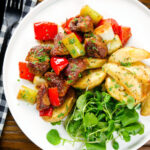
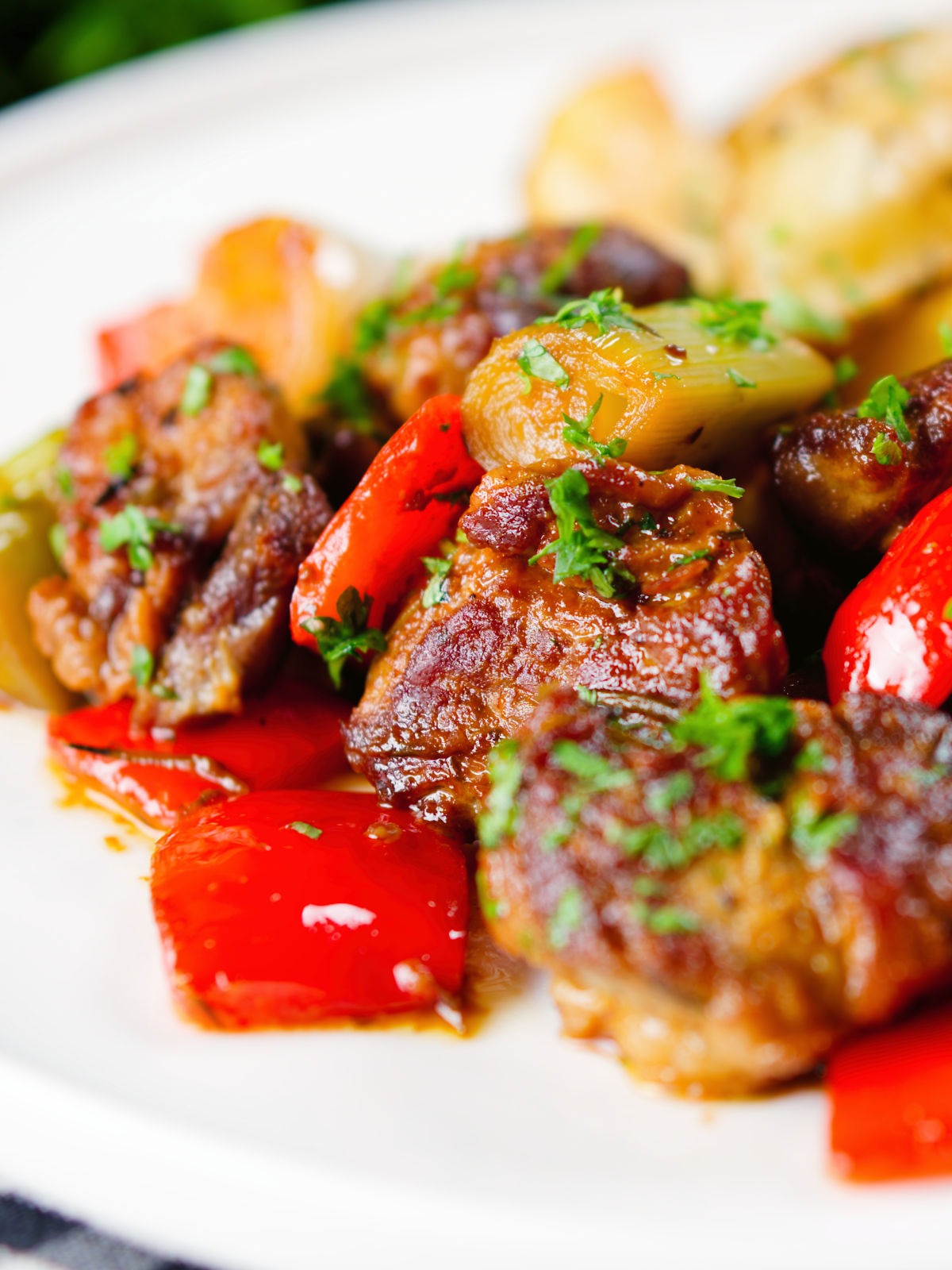
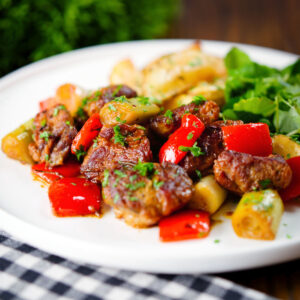
I've served my pork tigania in the pictures on this page with some peppery watercress and Greek lemon roasted potato wedges. I lifted the recipe for the potatoes from my Greek lamb chops with potatoes dish.
Quite often, this dish is served with crispy French fries in Greece, but I would probably throw some crushed roasted potatoes in the oven or the air fryer personally.
Stepping away from the world of spuds... You could absolutely serve this in a pita bread with some Greek salad and a yoghurt sauce.
Rice also makes for a really nice side dish for these bold pork chunks, and some Greek spanakorizo would work a treat.

Equipment Used
I only name-check specific brands of equipment if I think that they make a material difference to a recipe. But if you have any questions, feel free to ask them in the comments section below the recipe.
- Hob/Stovetop.
- 25cm or 10" frying pan.
- Stirring and serving spoons.
- Vegetable peeler.
- Kitchen knife.
- Chopping board.
- A combination of weighing scales, a measuring jug, measuring cups and spoons.
Greek Pork Tigania
Ingredients
- 400 g Pork Shoulder 14oz Cut into a large dice
- 3 tablespoon Olive Oil
- ½-¾ teaspoon Coarse Sea Salt
- 1 Lemon
- 1 teaspoon Dried Oregano
- 2 Sprigs Fresh Thyme
- 1 Sprig Fresh Rosemary
- 375 ml Water 1½ Cups
- 1 tablespoon Dijon Mustard
- 1 Small Red Pepper
- 1 Medium Leek 250g
- 175 ml Dry White Wine ¾ Cup
Instructions
- If your pork is not diced, cut it into a 35mm (1½") dice.
- Heat a 25cm or 10" frying pan over a medium-high heat, and when it is hot, add the olive oil, followed by the pork and brown it on all sides.This should take 8-10 minutes.
- Whilst the pork is browning, peel the zest from the lemon with a vegetable peeler.
- Once the pork is browning, sprinkle over the coarse sea salt, dried oregano and add the lemon zest, thyme and rosemary, then toss to combine.
- Reduce the heat to medium, then mix the mustard with the water, then pour it into the pan, scraping any bits stuck to the base.Then let the liquid cook until it has all evaporated and you are left with just the oil in the base of the pan. This should take around 30-40 minutes.You will know when it is ready because the pan will begin to sizzle and spit.
- Once the mustard and water mix has evaporated and the pork begins to fry again, remove and discard the stems from the red pepper. Cut the flesh into a 25mm (1") dice and throw them into the pan with the pork.
- Clean the leek and cut it into 25mm (1") long coins, and add them to the pan.Sitr and cook for 3-4 minutes.
- Pour in the white wine and again cook until it has all evaporated.
- Once the pork begins to fry again, cut the lemon that you zested earlier in half, squeeze the juice into the pan and cook for a final minute before serving.