
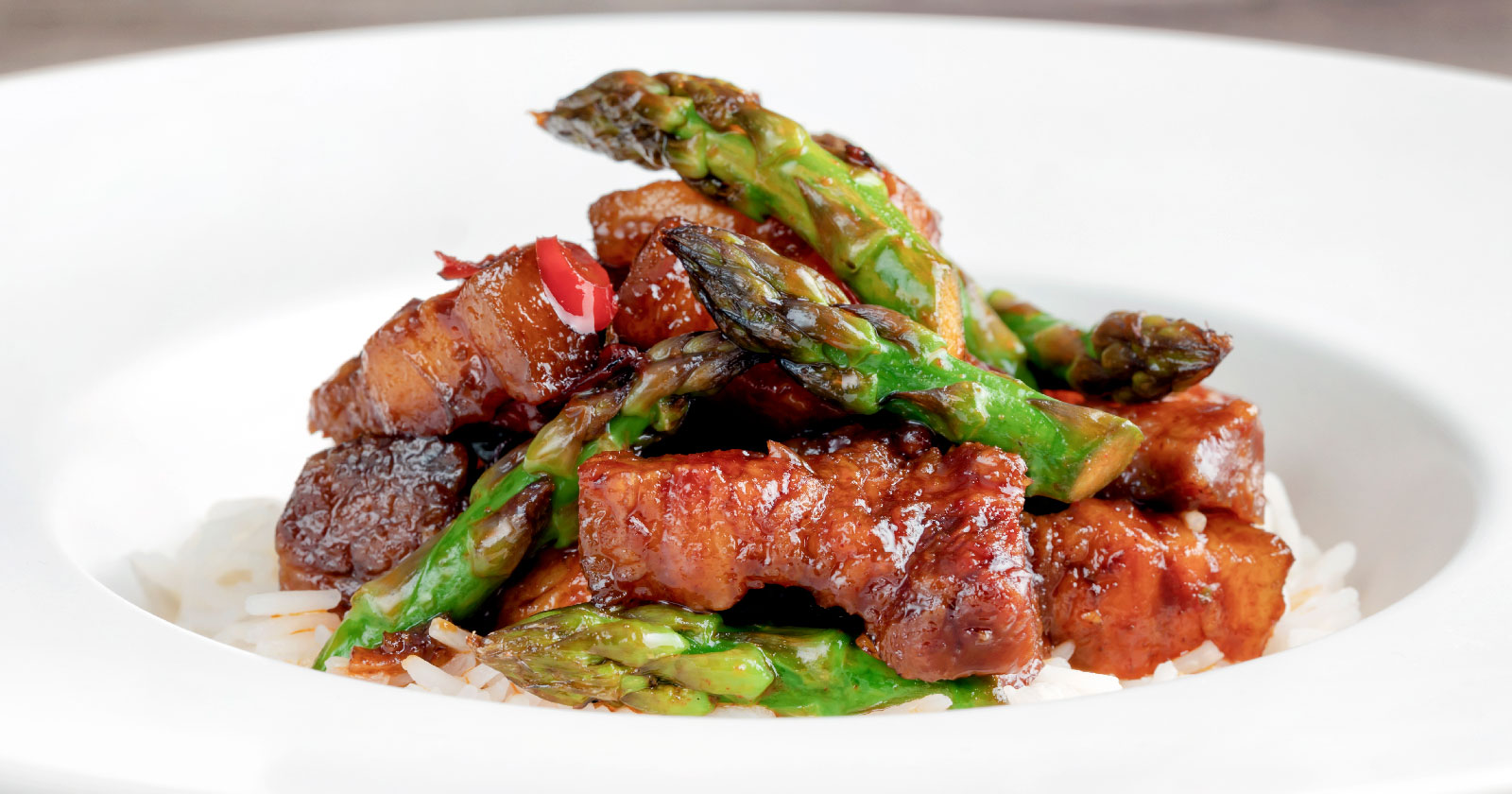
Korean Pork Belly with Gochujang Glaze and Asparagus


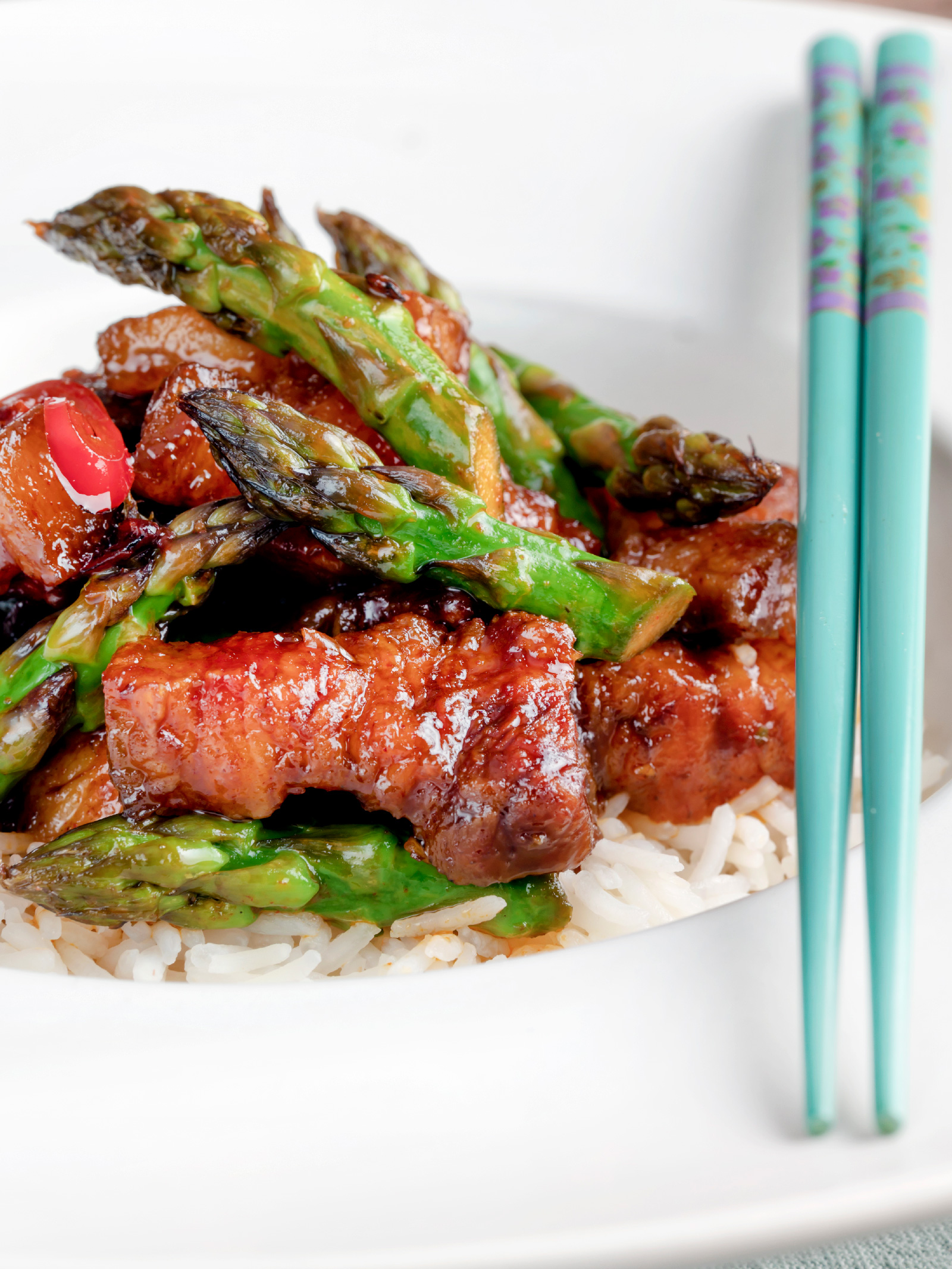
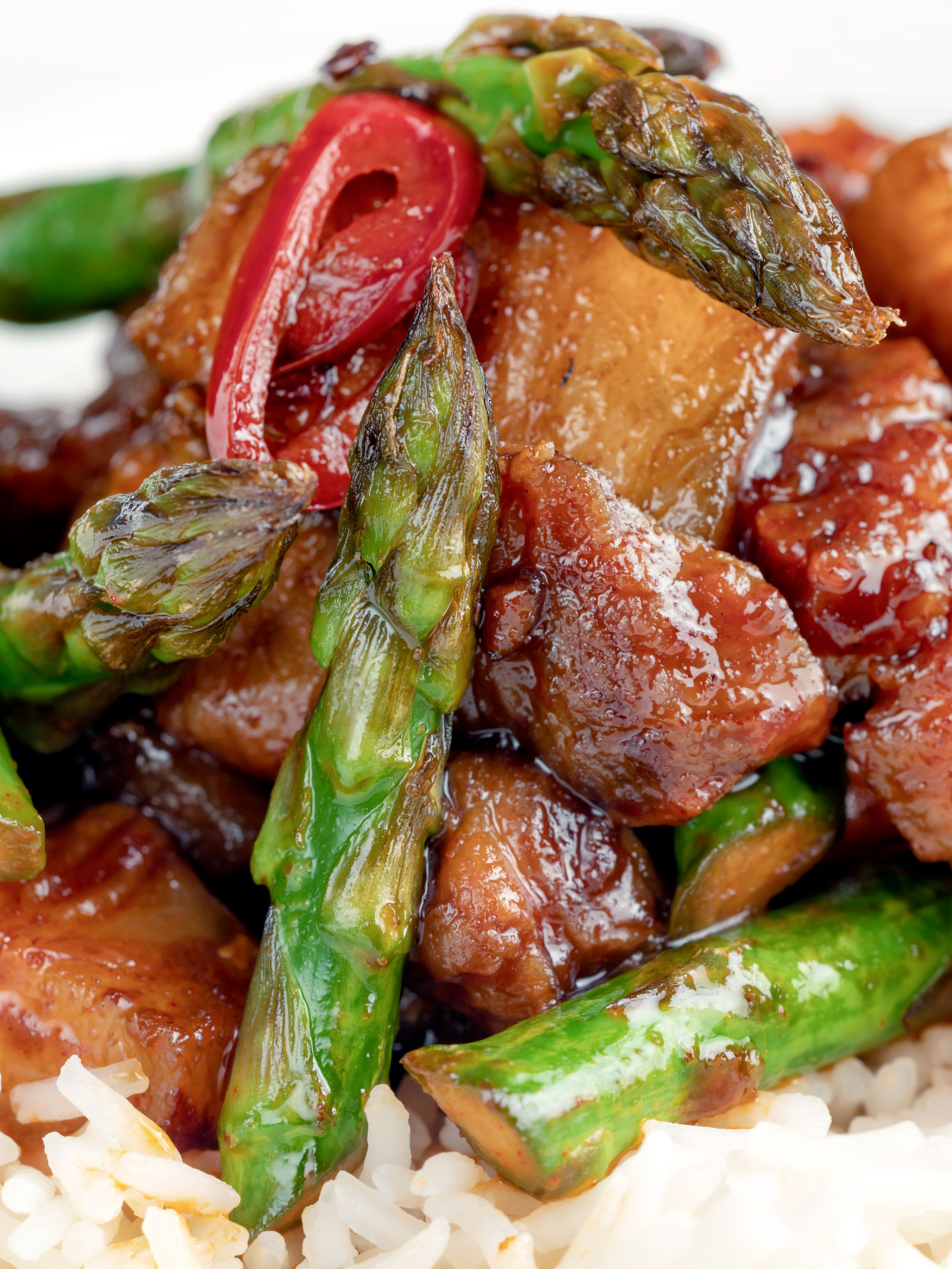
Korean pork belly in a gochujang glaze, it is cooked twice; first, it is simmered and then stir-fried with asparagus until perfectly cooked.
This recipe takes around 45 minutes to cook and tastes as though you have put in far more effort than you actually have!
Gochujang Pork Belly
You will find food with influences from all over the world on my site, and the emphasis is on "influences".
I don't pick up other recipes and tweak them; I pick up ingredients and cook with them. The ingredients that we have in the pork belly recipe are very much Korean.
I may or may not have put them together in a Korean way, but I have, however, put them together in a tasty way.
The initial cooking technique for the pork belly here is fairly reminiscent of my sticky pork belly and pineapple and salt and pepper pork belly recipes.
The pork is simmered to get the cooking process started. It is then stir-fried and finished with asparagus, and finally a pretty simple glaze of brown sugar, gochujang, soy and mirin.
For those not familiar, gochujang is a Korean fermented chilli and bean paste.
I am a relative newbie at cooking with it, but it is one ingredient that is featured in lots of my cooking of late.
Not least in this delicious and really rather simple steamed Korean chicken breast, my Korean chicken wings, and kimchi chicken recipes.
Frequently Asked Questions
Can I use another cut of pork?
I honestly wouldn't; the unique layers of meat and fat in pork belly are what make this recipe work.
You could use some pork blade or Boston butt; however, it will lack much of what makes this recipe special!
Is there a substitute for gochujang?
No. It is a unique fermented ingredient made from chilli, rice, soy bean flour and malted barley powder.
Don't worry about having loads left over, I have loads of recipes using it. I have mentioned a few above, but if you want a couple more, check out my gochujang tofu stew and quick Korean salmon!
Can I use something other than Mirin?
Yes, you can sub in dry sherry as a like-for-like sub; it is not identical, but it gives a similar vibe. You can also mix together rice wine vinegar with a generous pinch of salt and add that instead.
Why cook the pork twice?
This is a common way to cook pork belly in many East Asian cuisines.
It is often said that it removes impurities; in reality, it removes some of the "blood" and protein deposits, which form a foam as they cook.
They are not unhealthy, but by removing them during the cooking process, you end up with a really shiny glaze on the meat.
Serving Suggestions
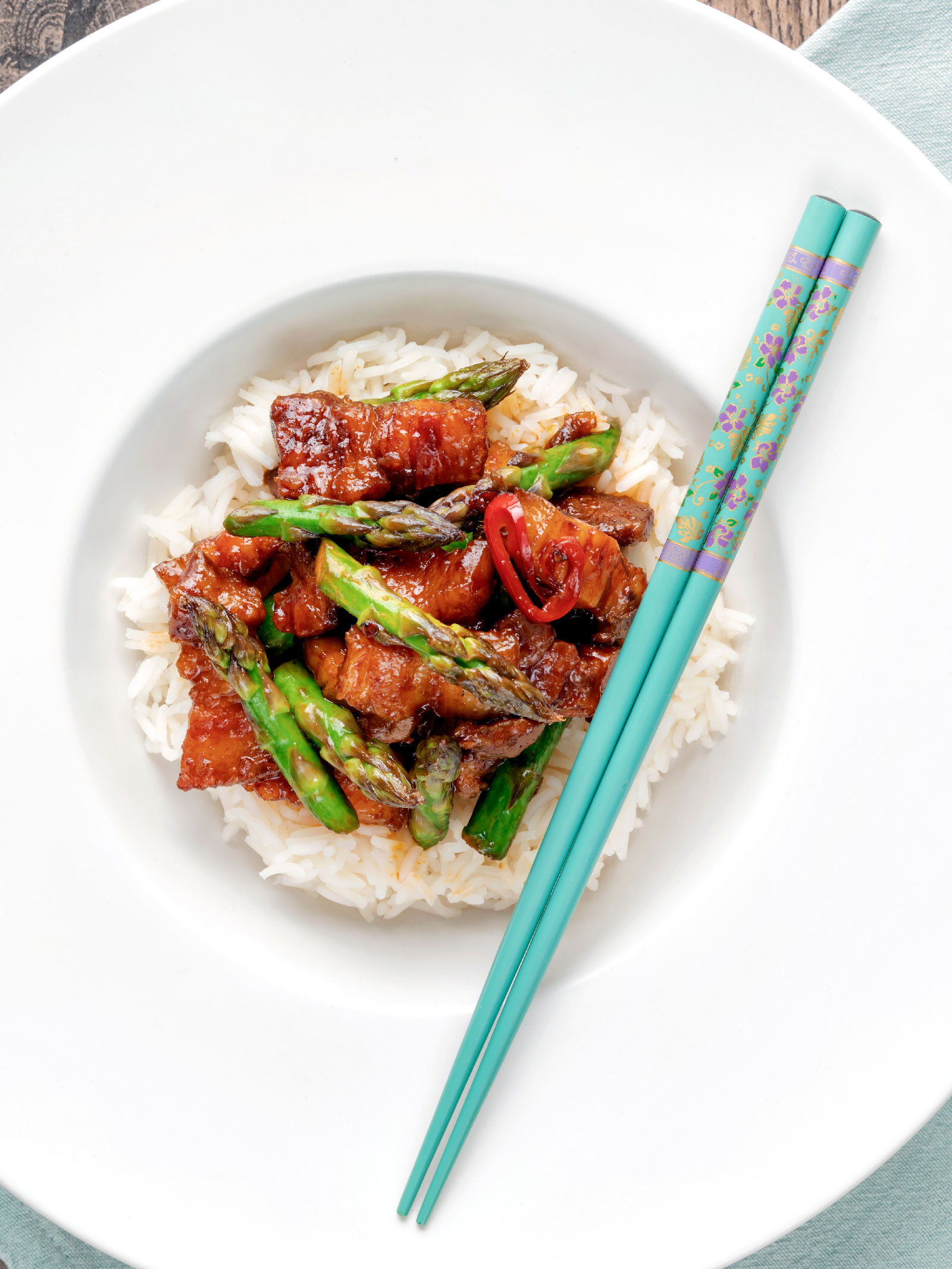
I serve this Korean pork belly over some simply cooked rice.
It is simple, neutral and carries all of the flavours from the main dish throughout the meal! You could also add egg fried rice if you have a second wok to cook it in!
If rice is not your mojo, then serve it with something like these seasoned Mung Bean Sprouts, Korean carrot salad or this stir-fried radish.
But sides... erm aside, this recipe begs to be played with!
Asparagus appears in this recipe because it is asparagus season. Later in the summer, I will add some French beans or runner beans. You could also use snap peas or mangetout.
In winter, I have been using broccoli or cauliflower, just cut them into fairly small 1-1.5cm (½") florets.
I have made this with Brussels sprouts, but you do need to parboil them for a couple of minutes first.
Equipment Used
I only mention specific brands of equipment if I think that they make a material difference to a recipe. But if you have any questions, feel free to ask them in the comments section below the recipe.
- Hob/Stovetop.
- Sharp kitchen knife.
- Chopping board.
- A combination of weighing scales, measuring cups and spoons.
- 24cm or 10" frying pan.
- Wok, I use a large, well-seasoned, carbon steel wok.
- Sieve or large slotted spoon.
- Mixing bowl and or prep bowls.
Twice Cooked Korean Pork Belly Recipe
Ingredients
- 350 g Pork Belly 12oz
- 25 g Gochujang Paste 1½ Tbsp
- 15 g Soft Brown Sugar 1¼ tablespoon
- 1 tablespoon Soy Sauce
- 1 tablespoon Mirin
- 1 teaspoon Sesame Oil
- 2 Garlic Cloves
- 2 tablespoon Cooking Oil
- 1 Red Chilli Pepper
- 300 g Asparagus Stems 12-18
- 1 Pinch Salt
Instructions
- Cut the pork belly into chunks roughly 1cm x 2cm (just under ½" by 1") in profile, and then place it in a 25cm (10") frying pan and just cover it with water. Turn the heat under the pan to medium-high and bring it to a boil, then reduce to a simmer and cook for 15 minutes, skimming off any foam that rises to the surface.
- Mix together the gochujang, sesame oil, soy sauce, mirin and brown sugar.
- Mince one of the garlic cloves and mix it through the sauce.
- Snap the woody base from the asparagus stems, then cut them into 5cm (2") lengths.
- Slice the second garlic clove as finely as you can.
- Cut the chilli pepper into 2-3mm (⅛") thick rings at a 45° angle to the pepper.
- Drain the pork and allow it to cool and continue to drain for 10 minutes.
- Heat a wok over a medium-high heat, and when it is hot, add the cooking oil and then throw in the pork.
- Cook for 10 minutes, tossing around in the pan every few minutes. You will need to drain off the fat 2 or 3 times.
- Add the asparagus, sliced garlic and sliced chilli pepper and stir fry for 2 minutes.
- Pour over the sauce and cook for a final 2 minutes.


Hi
Cooked twice now. The belly pork Yummie. The glaze is a bit thick and heavy. How could I lighten the glaze please? Maybe honey or rice wine?
Hey Pete, glad you like it... if I wanted to loosen up the glaze and make the dish a little more "saucy" I would use a little light stock, pork would be awesome, but chicken stock would work fine. You could even use a little of liquid used to cook the pork the first time round if you get rid of any impurities by straining it well. If you go too far and want to thicken it up again use a little cornflour and water to bring it back together. Using honey or rice wine would change the flavours significantly and change the balance.
Enjoy
Brian