
Easy Lamb Madras Curry Fakeaway
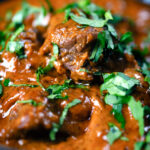
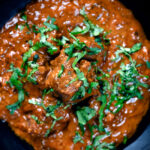
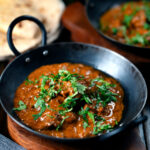
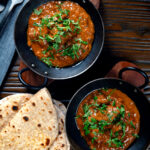
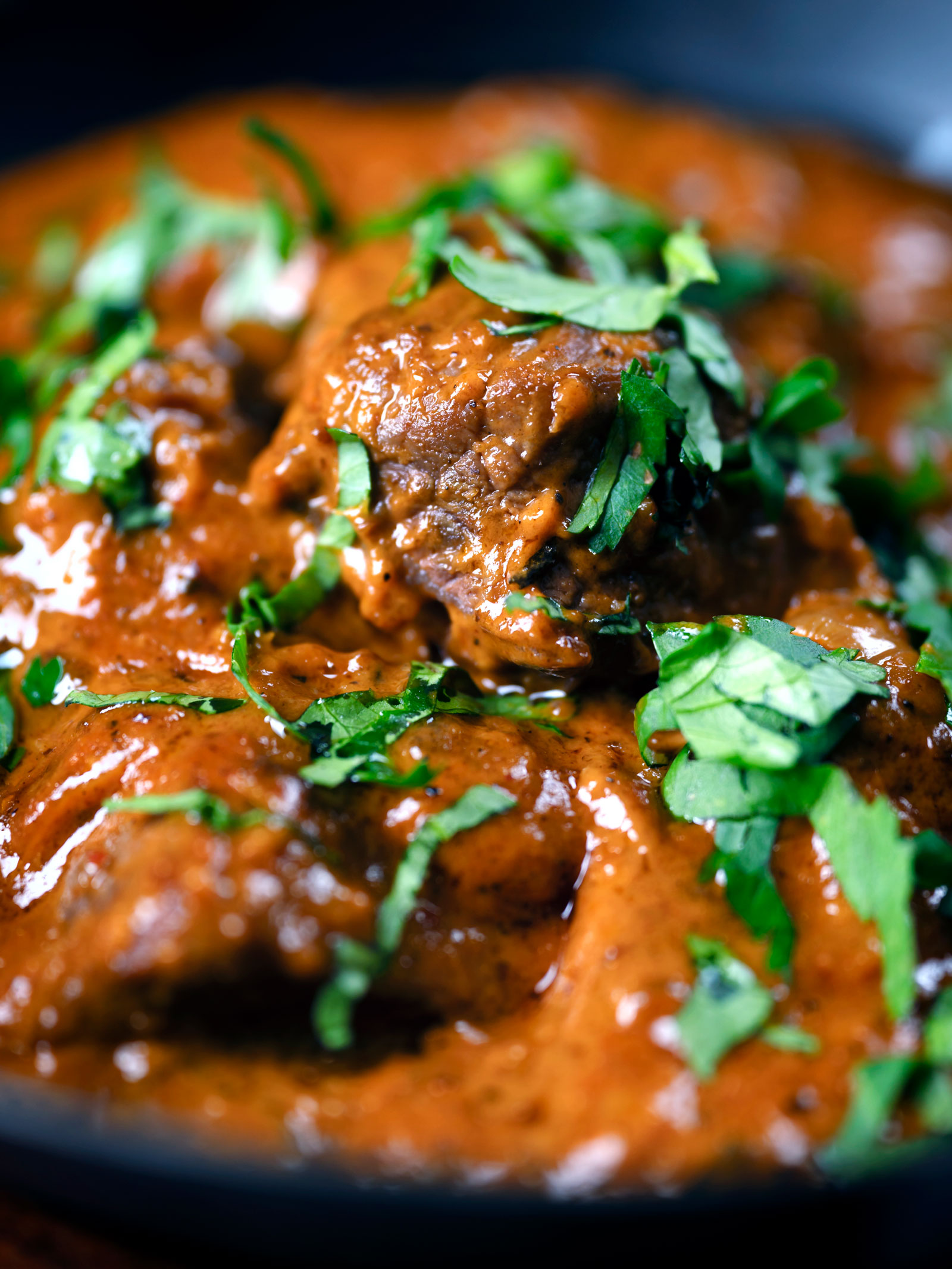
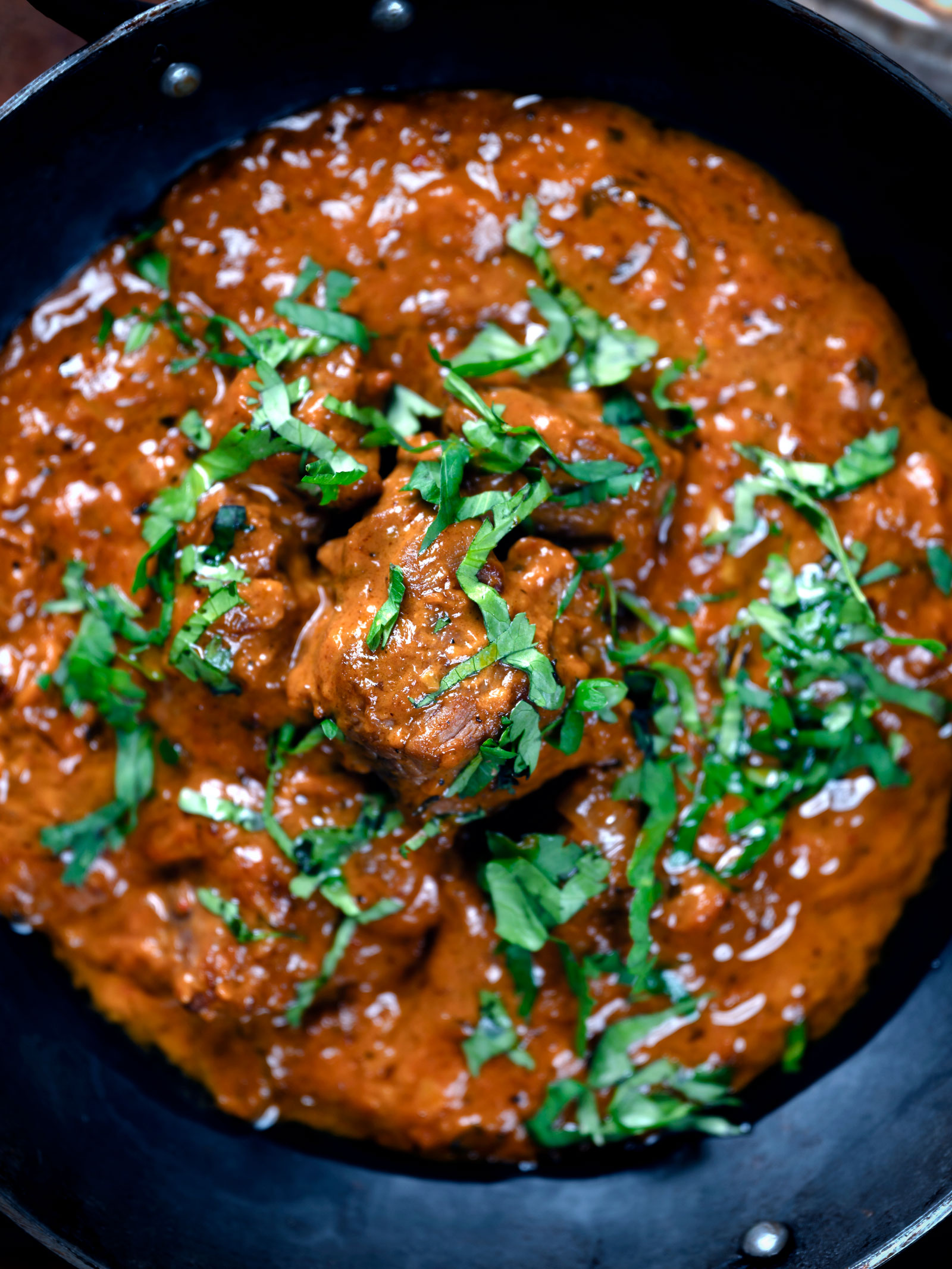
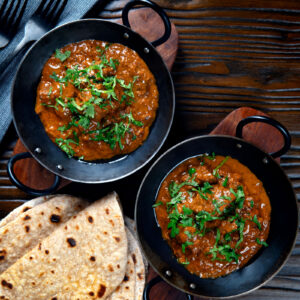
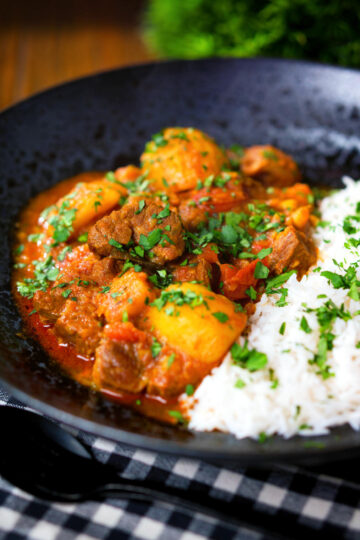
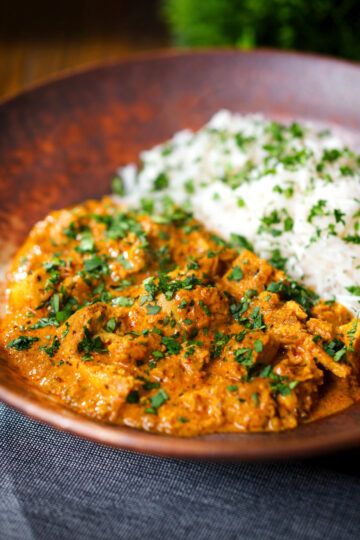
Lamb Madras, a fiery yet fragrant recipe inspired by an ever-popular British Indian restaurant classic, my version is both easy and delicious.
My version uses coconut milk rather than the traditional yoghurt to create a rich and luxurious slow-cooked spicy curry!
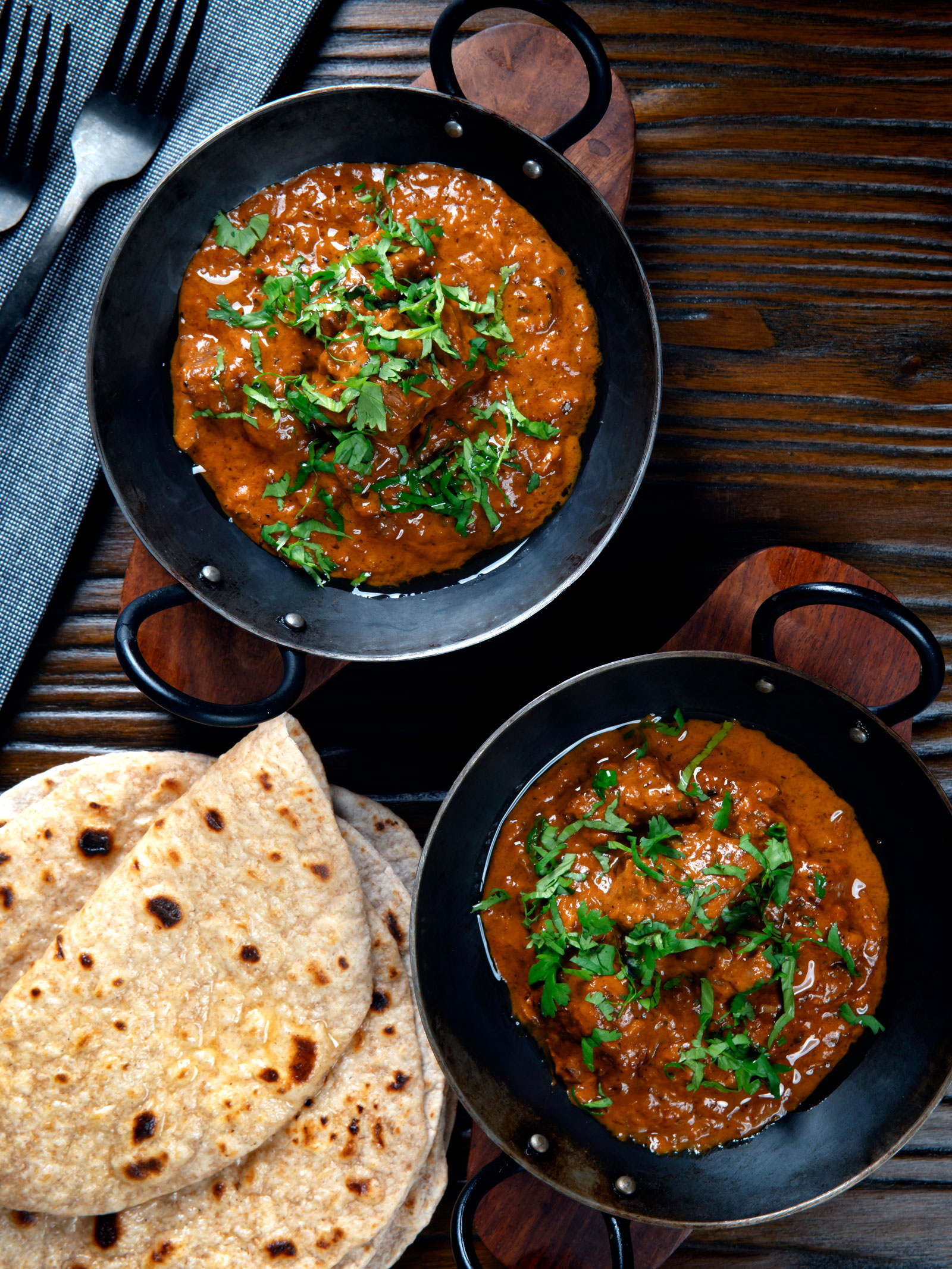
My Favourite Lamb Curry.
I love this lamb curry recipe; it is a real treat as lamb is a relative rarity in these parts. It joins my Lamb Rogan Josh, lamb pasanda and Keema Matar recipes in the lamb curry category!
This one has lots of big flavours but still ensures that the lamb still sings through as the foundation flavour.
The name "Madras Curry" is not really used in Indian food, apparently.
It is a name that came from "Bangladeshi Indian" restaurants in the UK in the 1970's.
It is typified by a fiery heat. I use a combination of dried Kashmiri chilli, fresh green chilli and lots of black pepper.
I temper this heat and add a mellow background foundation with coconut milk rather than the typical yoghurt.
Using coconut milk adds a little sweetness to this lamb madras. However, you must ensure that you do not add "sweetened" coconut milk.
Frequently Asked Questions
How hot is a Madras curry?
Individual tolerance to spice from chilli is so personal, so this is a difficult question to answer.
A Madras curry would be considered a curry at the hotter end of the spectrum.
On the spice scale, this lamb madras sits between my jalfrezi curry and my vindaloo curry. So definitely at the upper end of the heat.
Do I have to use whole spices?
No, you could use ready-ground spices if you like, but nothing gives quite the same aroma as freshly ground toasted spices.
As a rule of thumb, you need around a quarter to a third of the volume of ground spices to get the same amount as whole seeds. But I would increase this to half because store-bought ground spices so often lack a bit of "punch".
Can I use mutton?
Oh yes, please do! This dish is superb with mutton. I developed this recipe with lamb in mind because it is readily available to most.
Just cook it on low for a couple of hours, rather than one hour to tenderise.
Can I use another cut of lamb?
You could get away with some lamb leg or shin, but it will be a little tougher and will not have much fat.
A better choice would be lamb neck fillet, which has some lovely fat, and it works in this recipe perfectly.
Serving Suggestions
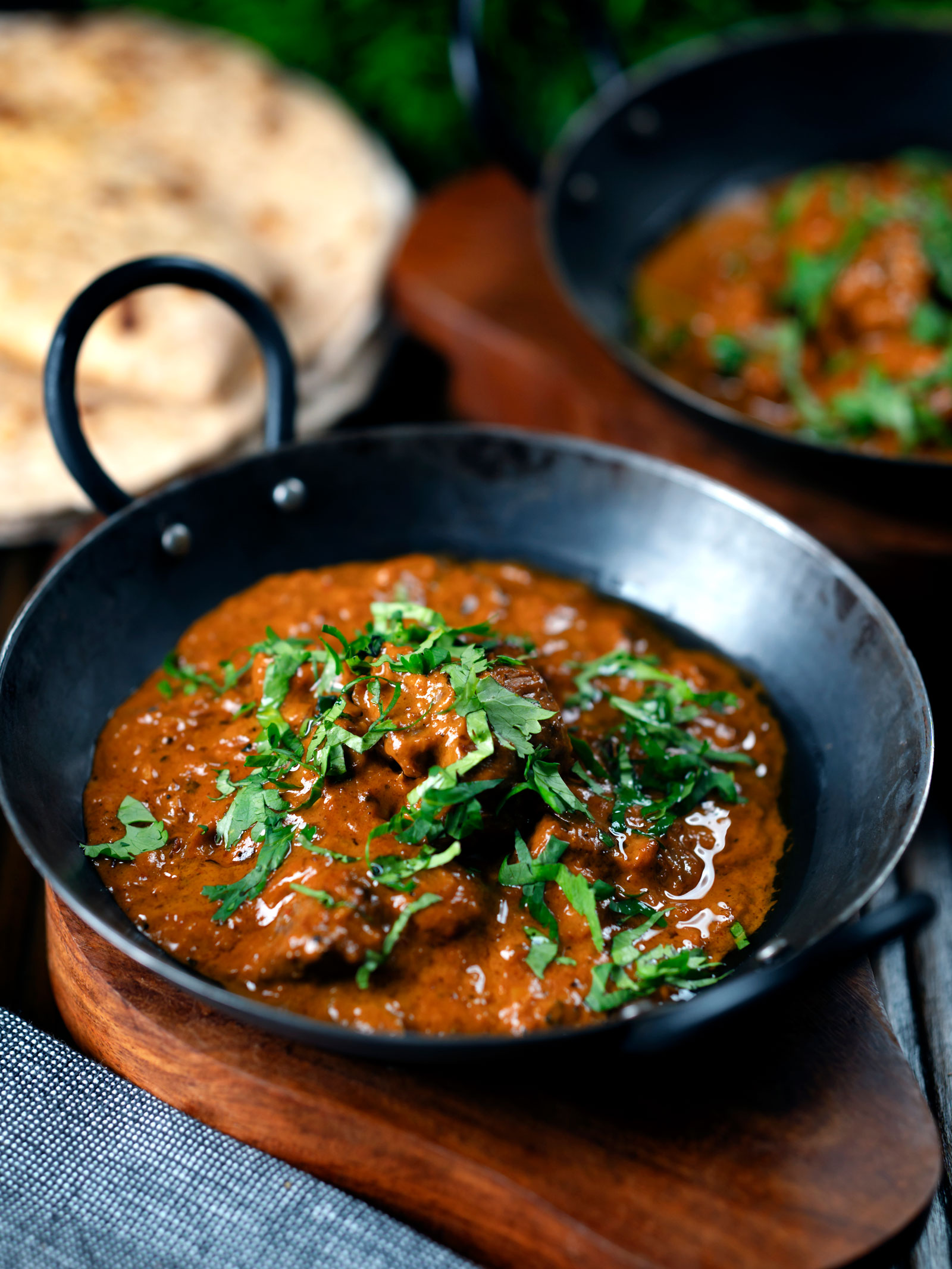
A good curry needs a side helping of Indian flatbread as far as I am concerned, and this lamb madras curry is no different!
That thick and unctuous sauce in this recipe screams for chapati or roti as far as I am concerned.
But if you wanted something different, the big bold flavours are also great with my Bombay potatoes recipe.
I mentioned the spiciness of this recipe above, and if you wanted something to counter that, then naan bread is a better option.
On that note, you could also add some mint raita on the side or serve it with a cooling lassi!
Equipment Used
I only name-check brands of equipment if I think that they make a material difference to a recipe. But if you have any questions, feel free to ask them in the comments section below the recipe.
- Hob/stovetop.
- 28cm or 11" frying pan (with a lid).
- Chopping board.
- Kitchen knife.
- Grater.
- Pestle and mortar or spice grinder.
- Stirring and serving spoons.
- A combination of weighing scales, a measuring jug, measuring cups and spoons.
Lamb Madras Curry Recipe
Ingredients
- 350 g Diced Lamb Shoulder 12oz
- ½ tablespoon Coriander Seeds
- 1 teaspoon Black Peppercorns
- ½ teaspoon Fennel Seeds
- ½ teaspoon Cumin Seeds
- 2 Cloves
- 2 Dried Kashmiri Chilli Peppers
- 2 tablespoon Cooking Oil
- 100 g Onion ⅔ Cup
- 15 g Ginger ½ thumb sized piece
- 6 Garlic Cloves
- 2 tablespoon Tomato Puree
- 200 ml Tin of Coconut Milk 7oz
- 1-2 Green Finger Chillies (optional)
- ½ teaspoon Salt
- 1 teaspoon Dried Fenugreek Leaves
- 1 teaspoon Garam Masala
Instructions
- Peel and cut the onion into a 5mm (¼") dice.
- Peel and mash the garlic into a paste.
- Grate the ginger.
- If you are adding fresh green chilli peppers, cut them into rings as finely as you can.
- Heat a 28cm or 11" heavy-based frying pan (that has a lid) over a medium-high heat. Add the coriander seeds, black pepper peppercorns, fennel seeds, cumin seeds, cloves, and dried chilli peppers, then toast until they become fragrant. Then crush them into a fine powder in a spice grinder or pestle and mortar.
- Return the pan to a medium-high heat, and when it is hot, add the oil to the pan. Cook the diced onion until they begin to colour, which should take 5-6 minutes.
- Now add in the lamb and cook for 5 minutes, stirring occasionally.
- Add in the garlic, ginger and tomato puree and cook it out for a minute or so.
- Pour in coconut milk, add the ground spices from step 5, the sliced green chillies if you are using them and salt. Stir and cover with a lid, cook for 1 hour over a very low heat.
- After 1 hour, remove the lid and reduce the remaining liquid to form a thick sauce.
- Remove from the heat, stir in the garam masala and crush in the dried fenugreek leaves, then stir and allow to sit for 2 minutes before serving.
Hello, I have made this and it’s going to be too spicy for my guests, can I add cream after re heating to mellow it out? Or will it curdle and ruin it?
Thanks
Hi Bee...
Sorry it took me a while to come back, I've been on a bit of a break over the Christmas period after moving house a couple of months ago.
Yoghurt (full fat) would make a much better cooling agent in a curry if it is a little to hot. So long as you stir it on off the heat, and gently bring it back to temperature, you shouldn't have a problem with curdling. This works with pretty much every curry.
I hope that helps.
Brian 🙂