
Carbonnade Flamande Belgian Beef Stew
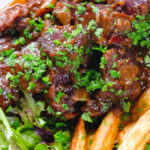
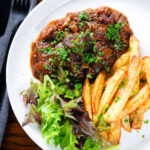
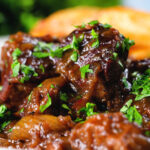
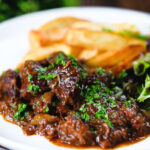
Carbonnade Flamande is a classic and delicious Belgian (Flemish) beef and beer stew that is very easy to cook despite its long cooking time.
This recipe takes almost 4 hours to prepare and cook, but you only spend around 30 minutes in the kitchen, and it is a great recipe to make a day or two in advance.
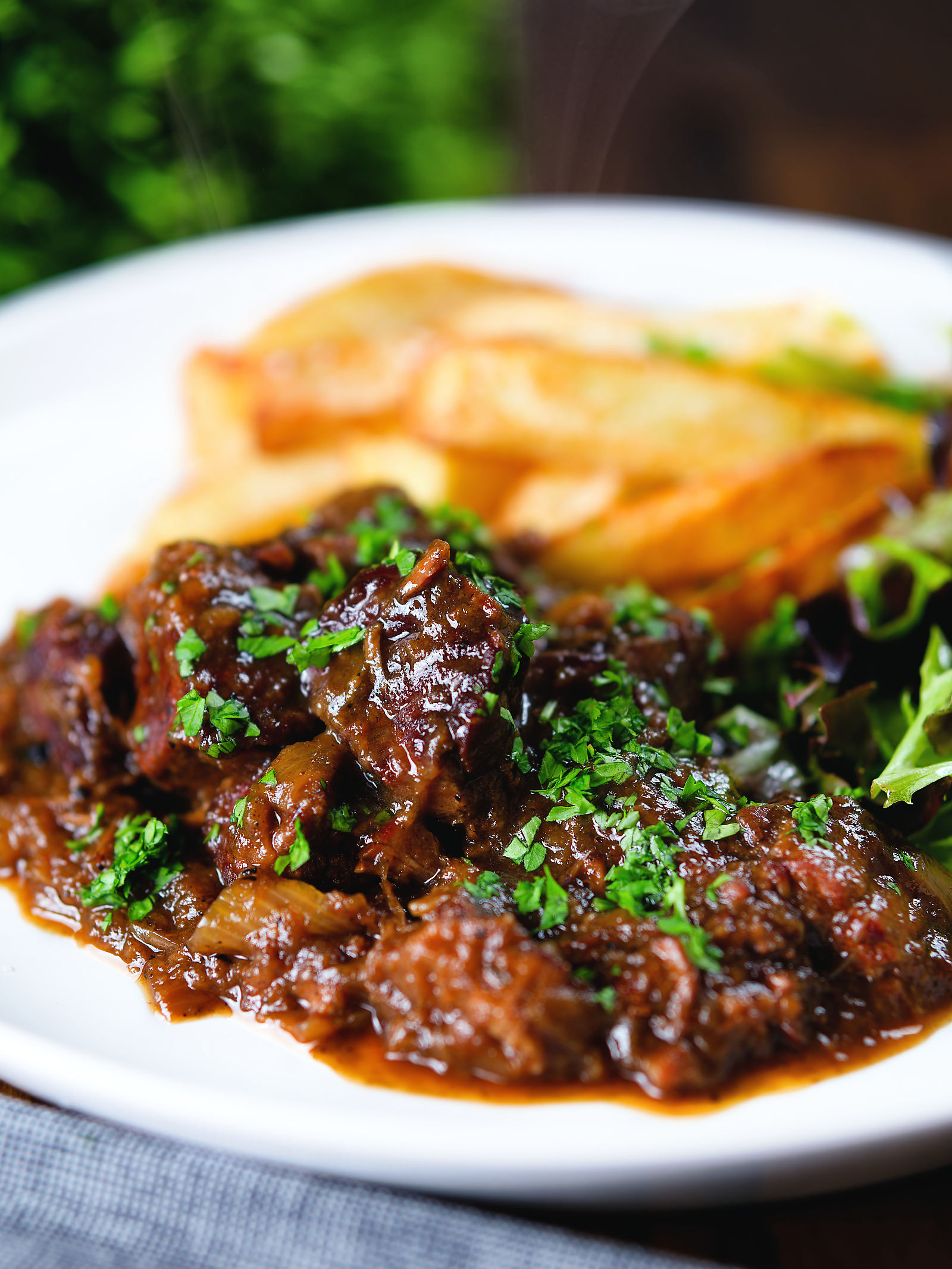
Belgian Beef and Beer Stew
You can't beat a nice beef stew, they are comforting, bold delicious and popular all over the world.
We Brits love a good beef stew and dumplings, the Greeks have kokkonisto and kapama, the Hungarians have Marha pörkölt, the Italians have spezzatino di manzo, and the French have beef bourguignon.
It's not just Europeans either; Mexicans have Mole, Indonesians have beef rendang, Filipinos have beef kaldereta, and the Vietnamese have bo kho.
Belgians have carbonnade flamande and it is fantastic, it is nowt more than chunks of beef cooked in beer with onions.
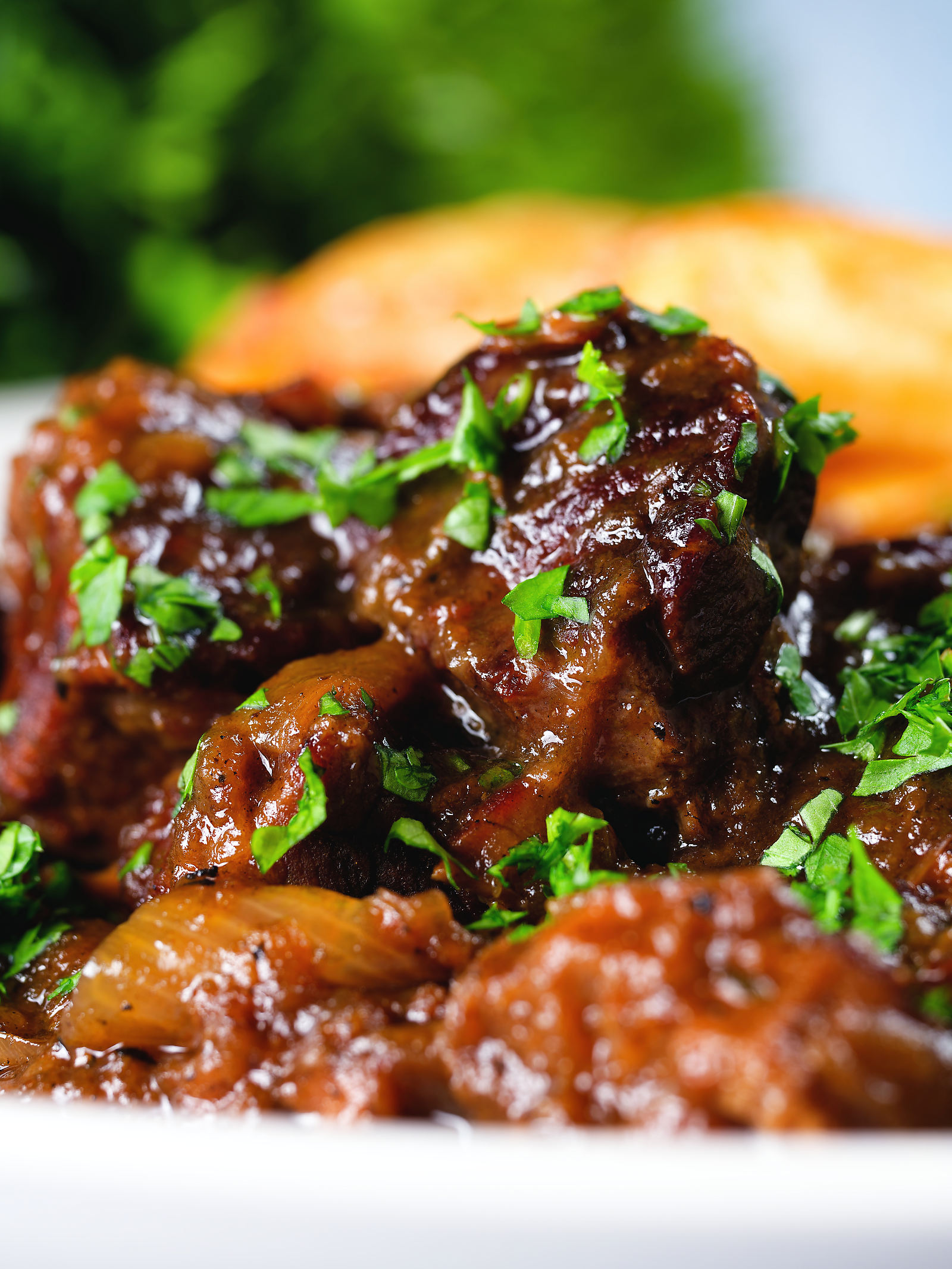
Surely something that simple can't be fantastic, but it is. There is a wonderful sweetness and richness thanks to the strong Belgian dark ale.
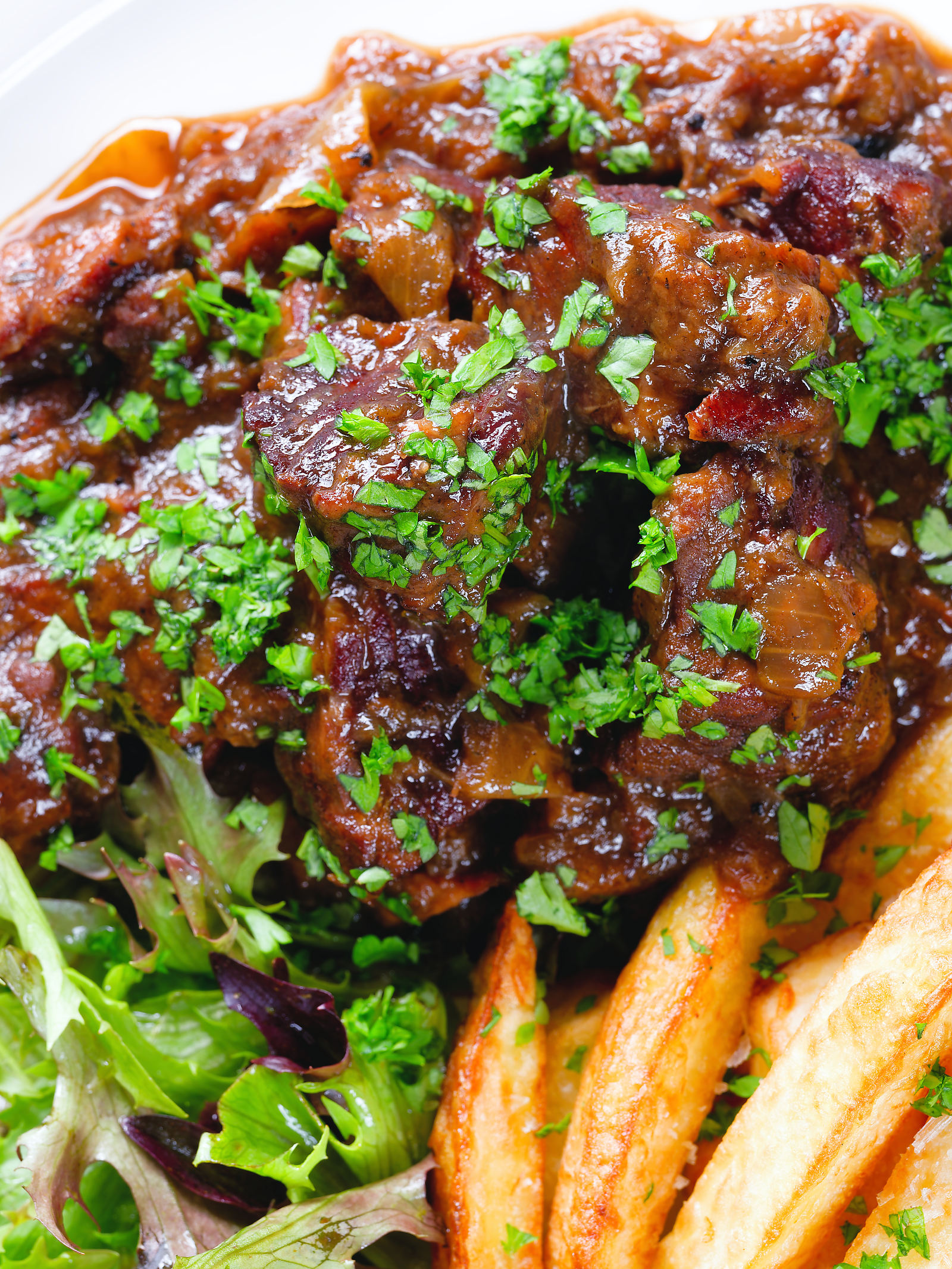
It's thick and satisfying too, thanks to it being thickened by bread that has a coating of mustard. Yes, you read that correctly!
This is one of the simplest beef stews to cook, and it also packs flavours that will make your heart flutter!
Frequently Asked Questions
What cut of beef should be used?
Any stewing beef will be fine in this recipe, but make sure you get it cut nice and large.
The obvious specific cut to mention would be chuck, but something like shin of beef or beef neck would be wonderful too.
What beer should I use?
The choice of beer for this recipe is incredibly important; do not be tempted to go for a lager or a stout!
Fortunately, good Belgian beer is very easy to find in British supermarkets. Look for a good dark heavy "ale", I use St Bernadus ABT 12 or Chimay Blue.
I have read of some people using Newcastle Brown ale, I had to test it for research (honest). It wasn't bad, but it wasn't quite right.
Is the redcurrant jelly traditional?
No, it is an addition that I make because Sirop de Liège, the traditional sweetening element, is not readily available in the UK.
Are there no vegetables?
No, this is pretty much a vegetable-free zone in its traditional form.
Carrots are often added in some versions, making it quite similar to a dish from the Netherlands, but they are considered to be too sweet by most traditionalists.
Can I cook this on the hob?
Yes, this is traditionally cooked on a hob or stovetop. However, if you cook on an induction hob, as I do, then the oven is the best option.
The cooking time remains broadly similar, and you should cook it at a very low temperature.
Can I make this in advance?
Yes, this dish is incredible after it has been left in the fridge for a couple of days.
Serving Suggestions
Apparently, there are two acceptable side dishes for carbonnade flamande according to many Belgian people.
The first is creamy, buttery mashed potatoes, an option that I thoroughly approve of.
As I am not from Belgium, I have another offering along similar lines, but with flavours that work wonderfully with this beef and beer stew. The nutty, subtle celery flavour of celeriac mash is a fantastic match.
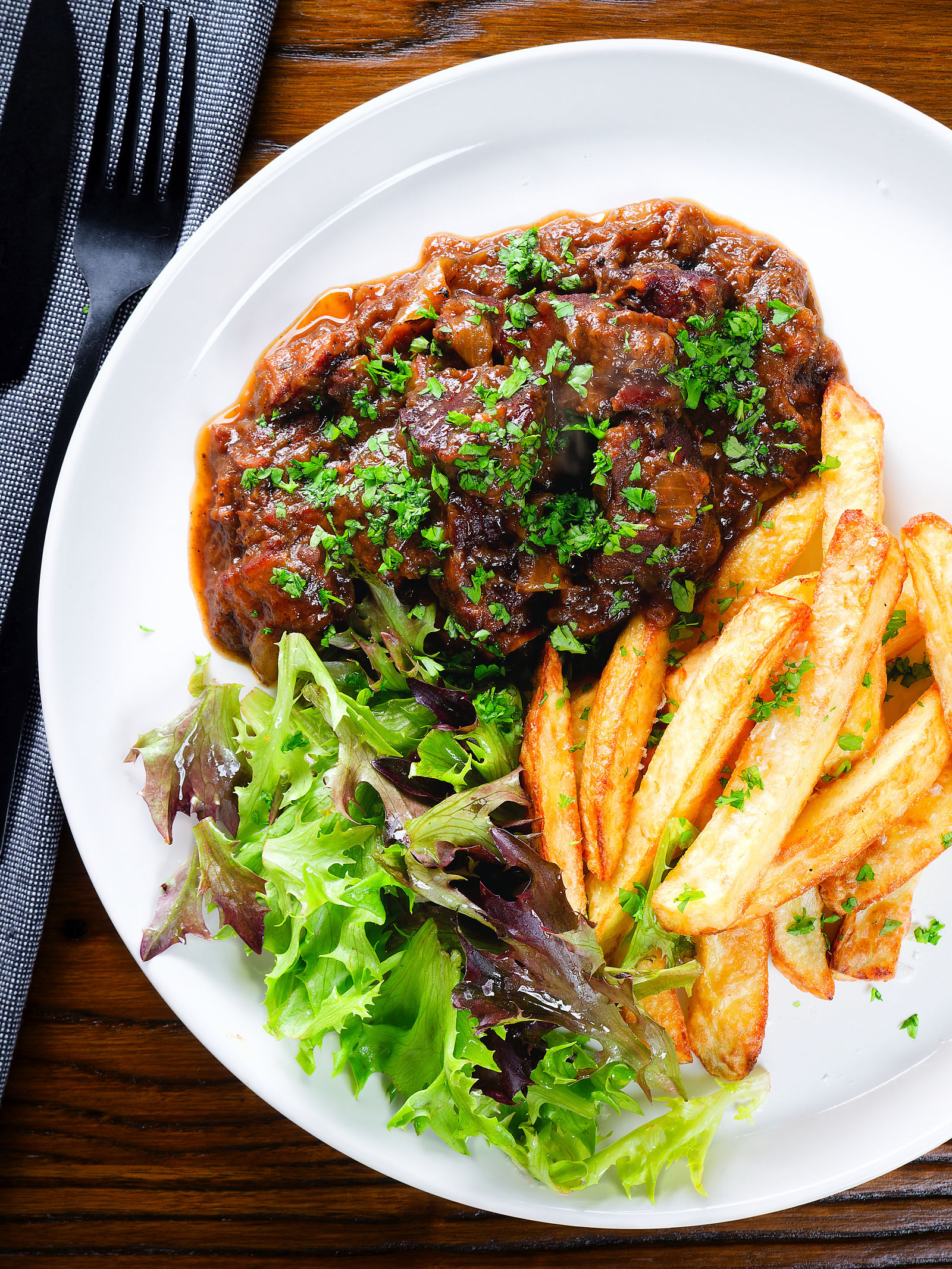
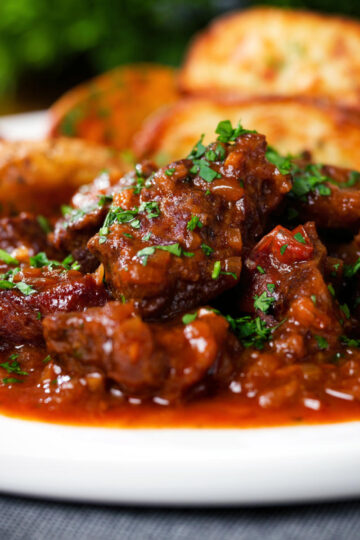
The second option is fries or chips. I've served my stew with my air fryer chips recipe in the pictures on this page. Properly fried chips would work even better if you have a deep-fat fryer ready to rock and roll.
Sticking with the "chips" theme, my fried new potatoes and straw potatoes recipes are awesome too.
Equipment Used
I only mention specific brands of equipment if I think they make a material difference to a recipe. But if you have any questions, feel free to ask them in the comments section below the recipe.
- Hob/stovetop.
- 20cm or 10" heavy-gauge saucepan.
- 28cm or 11" frying pan, not nonstick if possible.
- Kitchen tongs and serving spoons.
- Chopping board.
- A kitchen knife and a knife to spread the mustard.
- A combination of weighing scales, measuring cups and spoons.
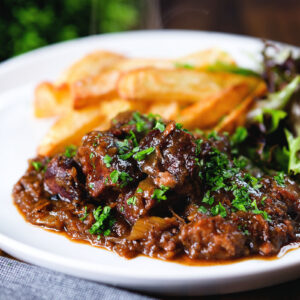
Carbonnade Flamande Recipe: Belgian Beef & Beer Stew
Ingredients
- 2 Large Onions 400g Total
- 15 g Beef Dripping 1 tablespoon
- 400 g Stewing Beef 14oz
- 20 g Butter 1½ Tbsp
- ½ teaspoon Salt
- ¼ teaspoon Pepper
- 330 ml Belgian Beer 11oz (I use St Bernardus or Chimay Blue)
- 1 Sprig of Fresh Thyme
- 2 Bay Leaves
- 1 Slice Brown Bread 20g (Thin Cut)
- 10 g Dijon Mustard 2 teaspoon
- 1 tablespoon Redcurrant Jelly
- ½ teaspoon Malt Vinegar
Instructions
- Heat a 20cm or 8" heavy stew pot over a medium-low heat and add the beef dripping.
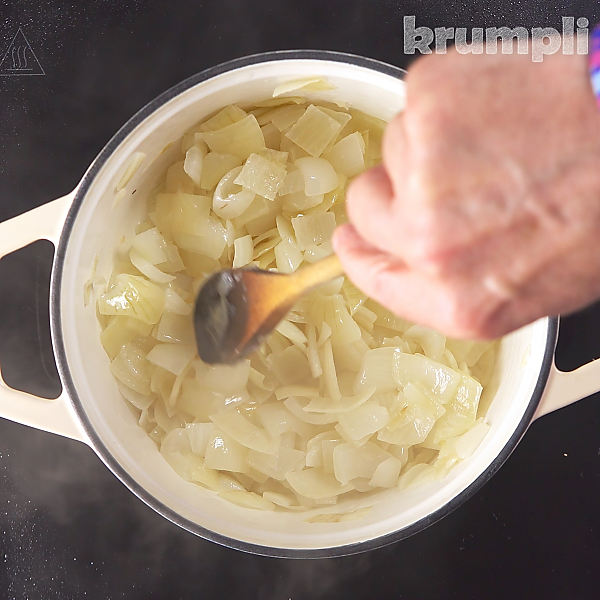
- Cut the onions in half, peel them, then cut them into a large 2cm (¾") dice.
- Once the beef dripping has melted, add the onions and soften them for 20-25 minutes, stirring them occasionally. You are not aiming to caramelise the onions or to add any colour; just get them well softened.

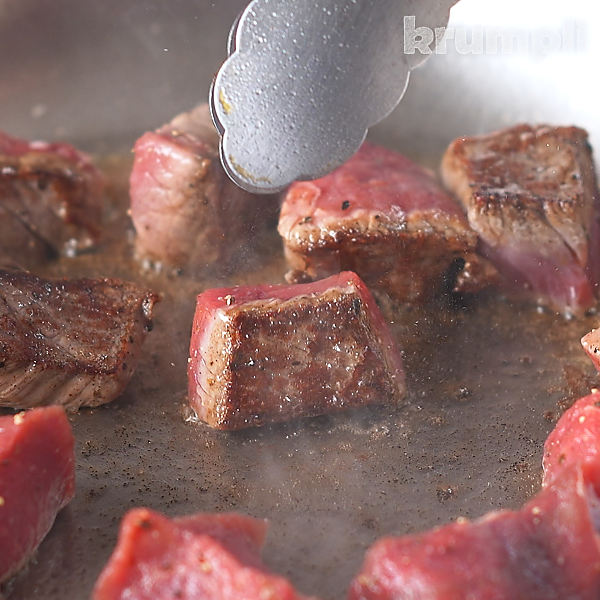
- Cut the beef into large 25-35mm (1-1½") chunks.
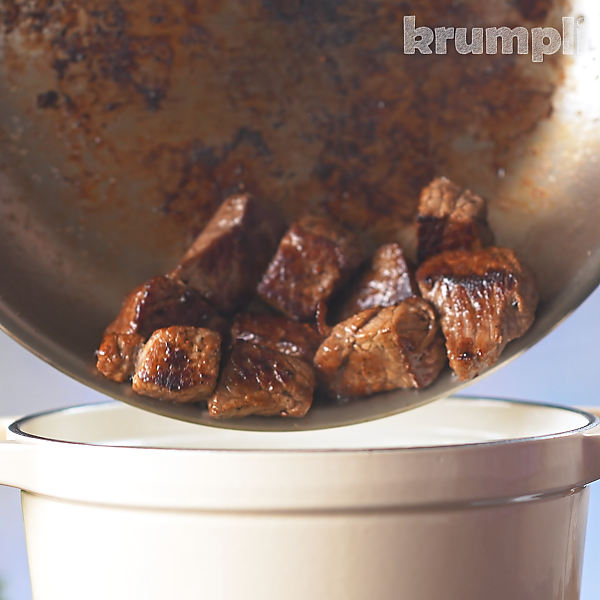
- Season the beef with the salt and pepper, then heat a 28cm or 11" frying pan over a high heat, try not to use a nonstick pan if possible. Add half of the butter, then sear half of the beef on all sides.
- Transfer it to the onion pot, add the remaining butter to the pan and again add it to the pot with the onions.
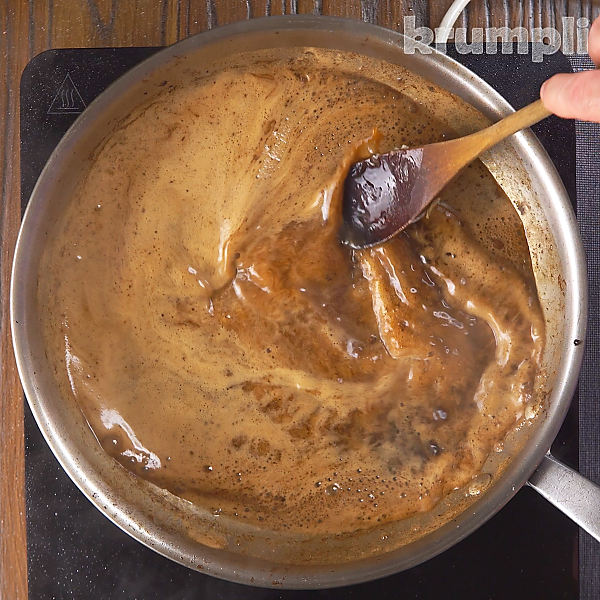
- Return the frying pan to a high heat and deglaze it with the beer.
- Once the beer begins to boil, pour it over the beef. There should be just enough liquid to cover the beef if you use a pan the same size as me, if not, top it up with a splash of water.
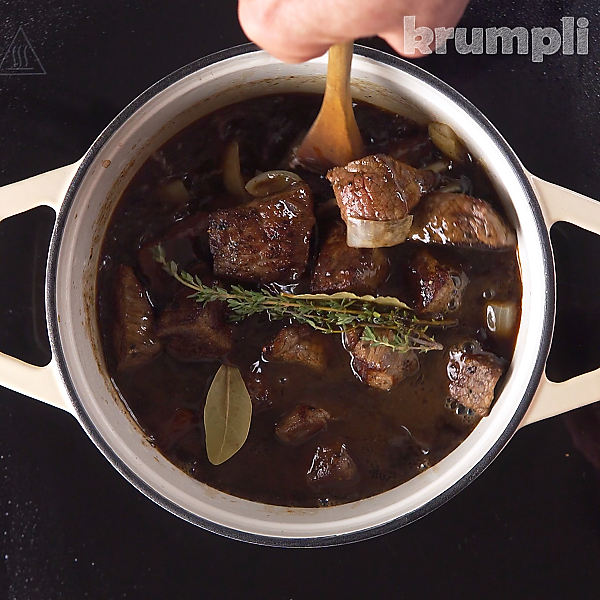
- Add the sprig of thyme to the pot, followed by the bay leaves.
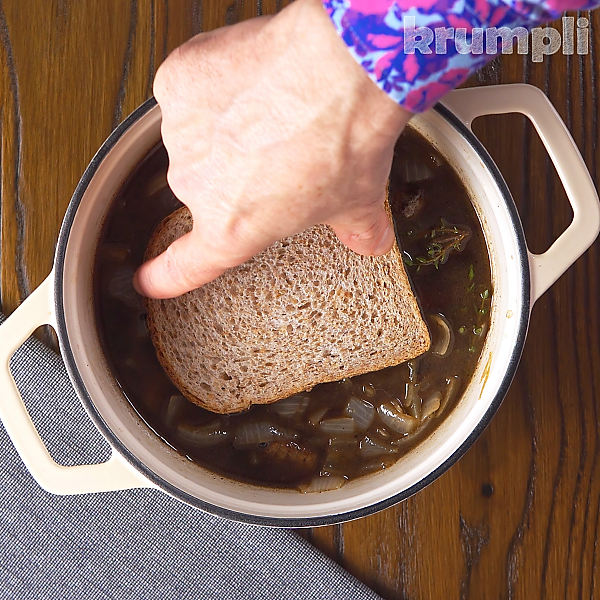
- Spread one side of the butter with the mustard, then place it mustard side down on top of the stew, pressing it down so that it is in contact with the sauce, but not submerged. It is important now you leave the stew alone and let the bread "disintegrate" as it cooks. Transfer to an oven at 140°C or 285°F for 2½ hours.
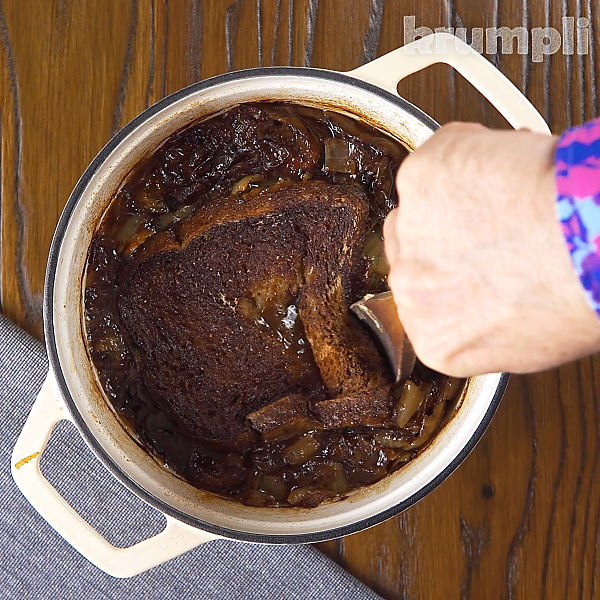
- Remove the pan from the oven, stir the bread through the sauce.
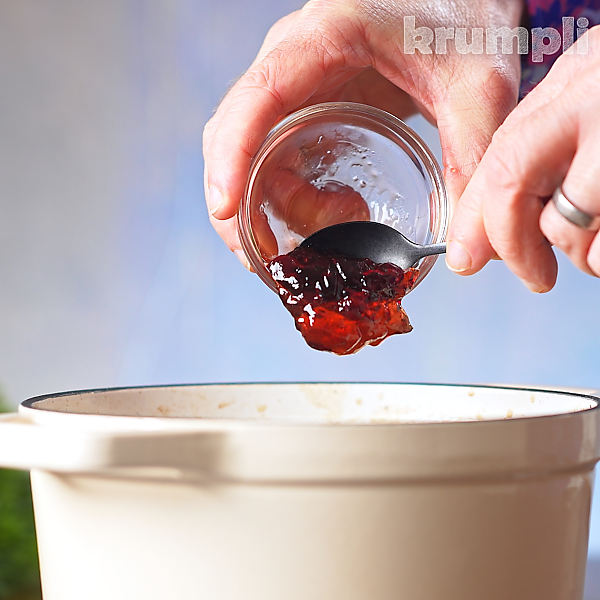
- Add the red currant jelly and vinegar, stir again, then taste and add salt if required.
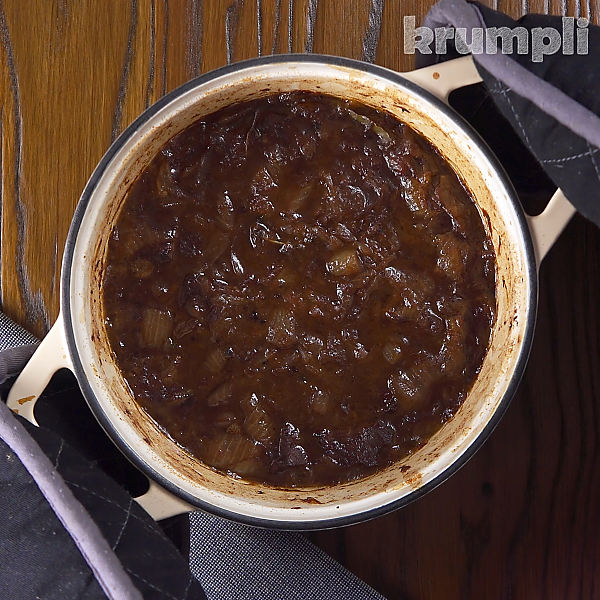
- Return the pan to the oven and cook for a final 30-45 minutes.


Very easy and very tasty. Smelled great. I wasn’t sure about it because I don’t drink or cook with beer, but glad I went ahead. Will definitely make this again.
Given that you don't consume beer, I am delighted that you tried this, and even more so that you enjoyed it!
It's a superb stew, and it just isn't the same without beer. I cook with a decent amount of booze, and it really does open up flavours that other liquids just can't replicate.
Thank you for taking the time to come back, leave a comment and a review; they make a huge difference for independent websites 🙂
Brian 😀
Hi Brian,
Fabulous recipie, thank you. I could not wait till I got all the ingredients and as I had some beef cheeks in the freezer I used those, and as I had just finished a wholemeal loaf, I used a rye based sourdough discard instead, 1 big tablespoon stirred through with some grain mustard, which worked very well. I had a spare bottle of a Scottish brewed beer which had malt, hops etc and uses Scottish Heather for a peat herbal, slightly spicy finish, so that went in on substitute as well.
Decided because of work, to use a slow cooker on lowest setting for 12 hours.
Fabulous flavour, only improved with some time in the fridge and then made a lard based pastry for a pie to finsh what little was left ..... Looking forward to trying your version in full, especially as an excuse to go and buy some Belgium beers.
The use of bread (or discard) is very interesting, must use this more often, thanks for the heads-up. I have some venison in the freezer, so might try this as an option next.
Thanks again. Jamie
Glad that you enjoyed it Jamie... the sourdough discard sounds like an interesting experiment, I'm not much of a baker because neither of us can be trusted with a warm fresh loaf 😉
Have fin with the venison 🙂
Brian
Good Day, Brian,
By brown bread do you mean whole grain sandwich bread, or the Boston brown bread we Americans are familiar with?
Gina
Hi Gina...
I'm not particularly clued up on US bread other than the on line jungle drums, thin-medium sliced wholemeal sandwich bread is what I use here in the UK and it is fairly similar to the stuff available in Europe. If you have any insights to using US bread please do come back and let me (an everyone else) know 🙂
Enjoy
Brian