
Rabbit Cacciatore, Coniglio alla Cacciatora

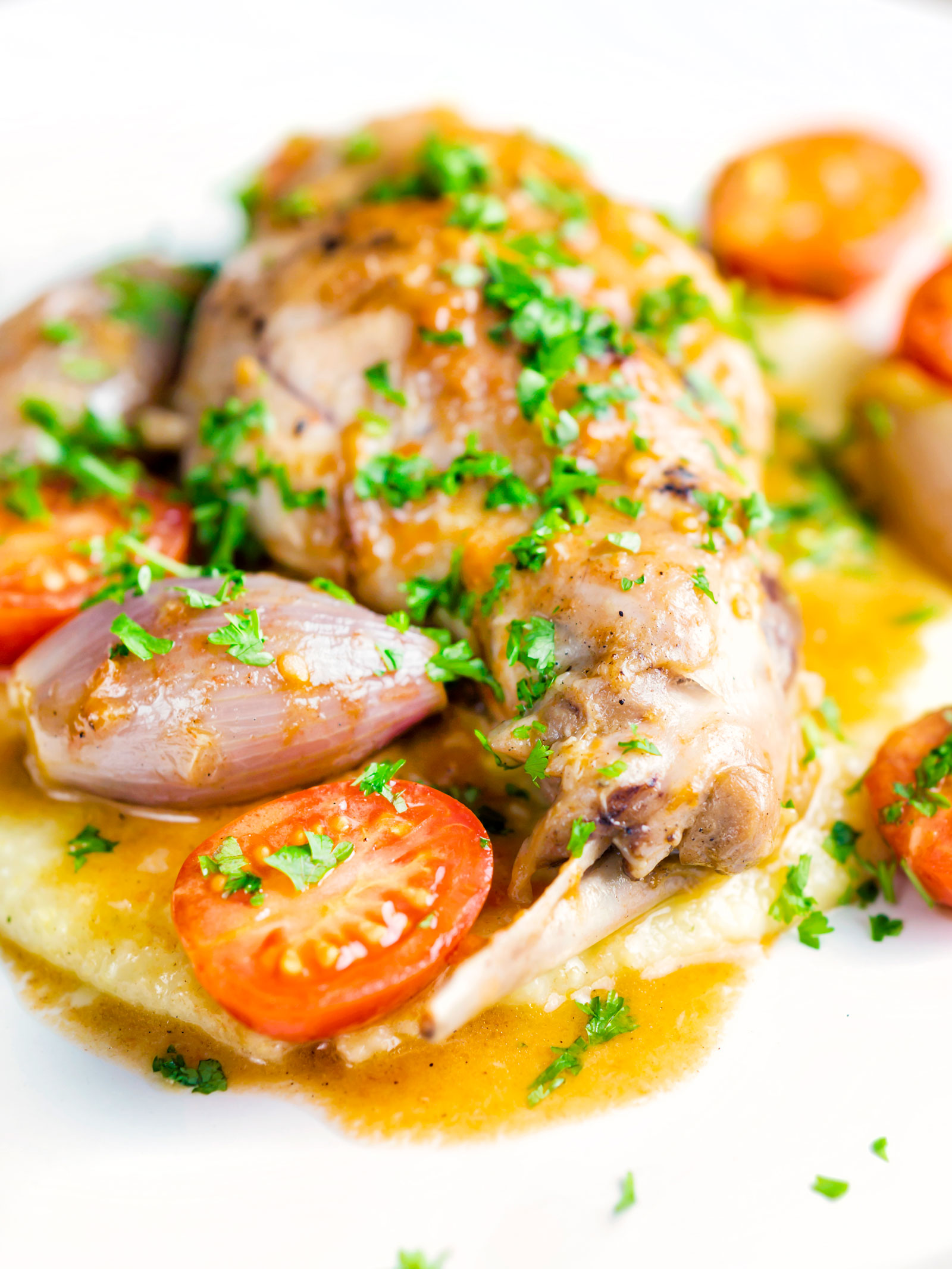
Rabbit Cacciatore or Coniglio alla Cacciatora, my version is a delicious, light, and simple version of a classic Italian rabbit stew.
Using white wine ensures that the flavour of the delicate rabbit shines through in this dish and is not masked by red wine and tomatoes.
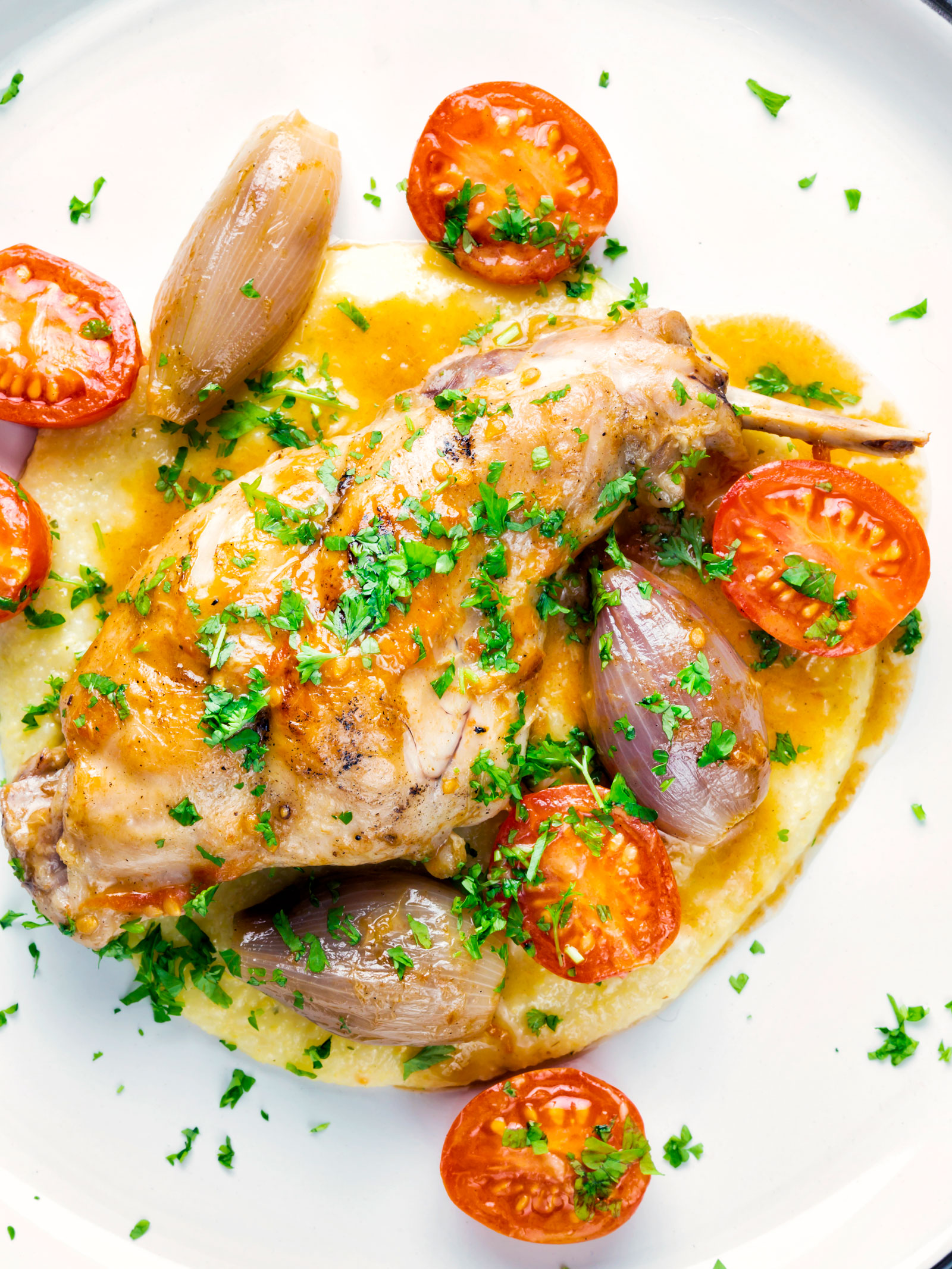
Coniglio alla Cacciatora or Hunters Rabbit.
I adore cooking with rabbit, and this Italian number joins a diverse range of recipes with a host of influences.
There is a very British rabbit stew, an Italian influenced rabbit ragu, superb Spanish paella Valenciana and even a lightened up rabbit tagine with North African influences.
The name cacciatore is Italian in origin and translates to "Hunters", which makes this the Italian equivalent of chicken chasseur. It is pretty much the meat equivalent of the Fisherman's "catch of the day" stew or soup.
Unlike many Italian recipes, it has no fixed set of ingredients, although I am sure you can find someone to call me out on that!
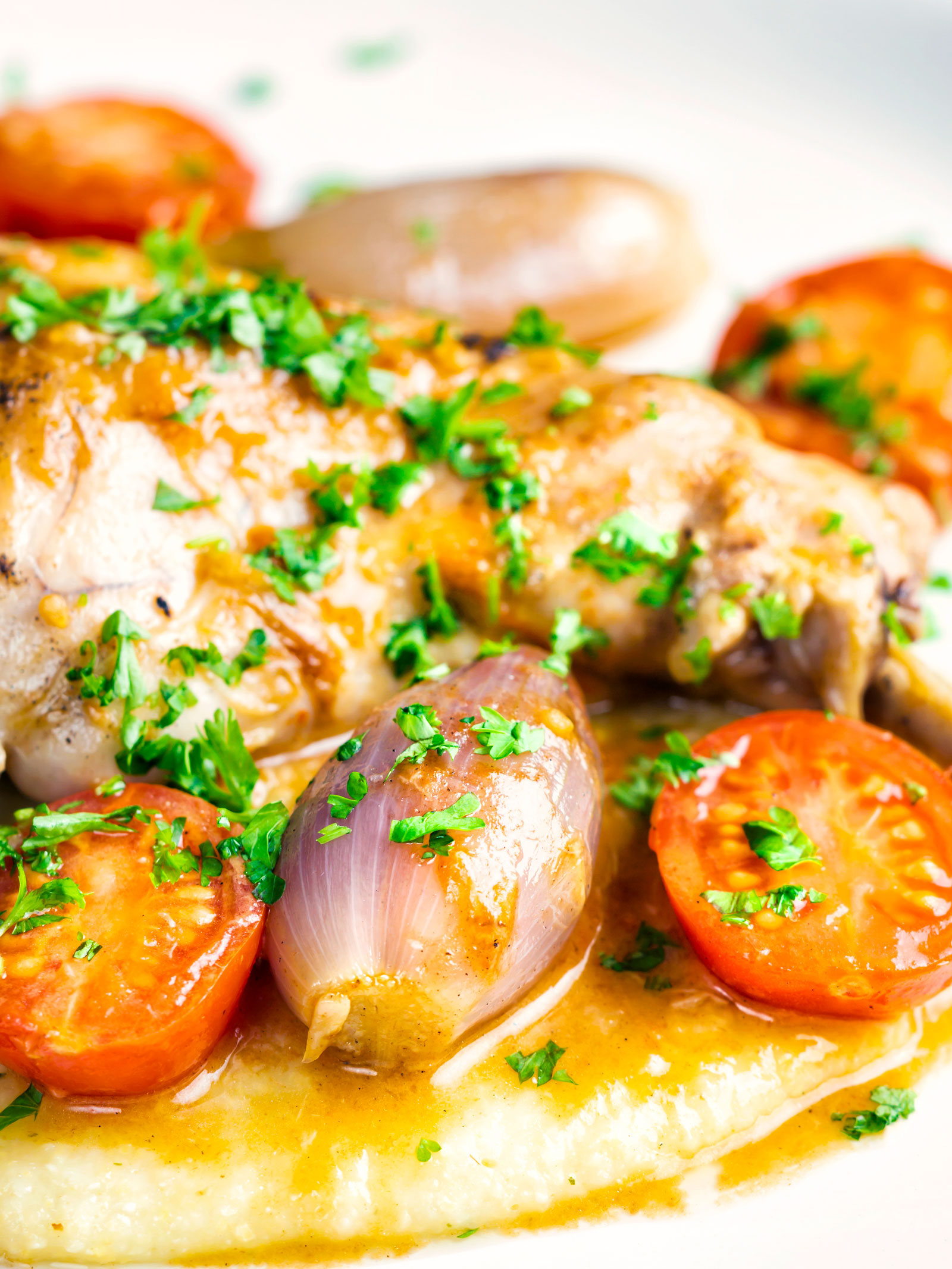
It is commonly associated with a tomato sauce, and I add a nod to this with the cherry tomatoes. I add them at the start of the cooking to help form the sauce and at the end of the process.
Cacciatore is often made with red wine, but I prefer to use white wine for both this rabbit variation and my chicken cacciatore.
I do this because I think that it provides a much better balance to the sauce than red wine.
Once you have mastered rabbit, why not try other wild meat recipes like my roast pigeon with confit legs, roast guinea fowl or braised pheasant casserole?
Frequently Asked Questions.
Does this recipe use farmed or wild rabbit?
I develop all of my rabbit recipes with a farmed rabbit in mind.
I do this because it is much more predictable, but you can use a wild rabbit. You will need to increase the cooking time and reduce the cooking temperature though! I would double the cooking time and reduce the cooking temperature to 150°C-160°C or around 320°F.
Can I use other parts of the rabbit?
Yes, if you have a whole rabbit cut into joints, throw it all in. Just be careful with the loin because it can dry out very quickly, even if it is on the bone!
Do I have to use cherry tomatoes?
Not at all, cut up any old tomatoes that you like and chuck 'em in, but if they appear watery, discard the seeds.
What white wine should I use?
The obvious answer to this is to suggest a nice Pinot Grigio; it is a great neutral cooking wine. But I like cooking this dish with a nice acidic Muscadet.
I'd avoid any medium or sweeter white wines for cooking on most occasions.
Can I make this in advance?
Whilst many dishes like this are great at cooking and reheating, rabbit is a very delicate meat, and it does risk becoming dry when it is cooled and reheated.
As a result, I do not like to cook this dish in advance or cook it with leftovers in mind.
Serving Suggestions.
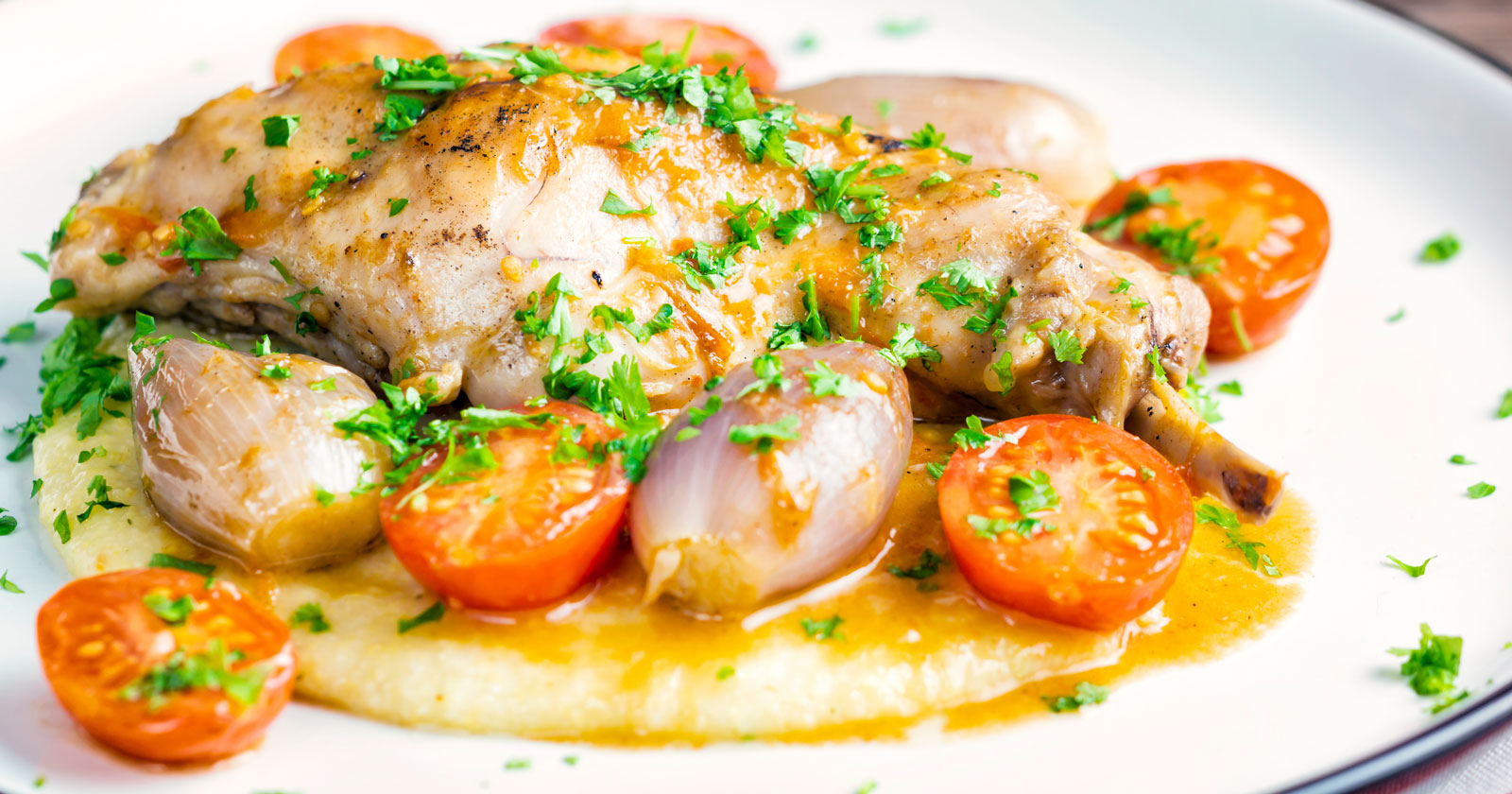
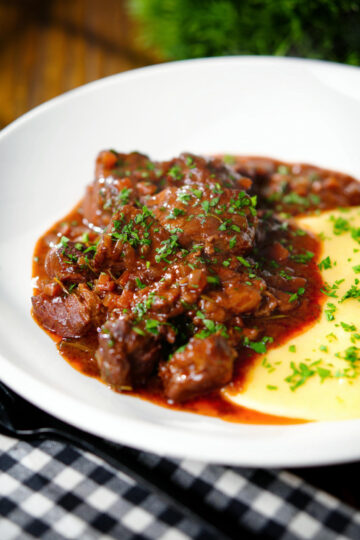
I love serving any cacciatore with a cheesy polenta porridge because it complements the dish so well! I usually change up the cheese to match the intensity of the sauce.
For this rabbit recipe cacciatore, I would use something pretty gently flavoured like nutty Gruyère or Comté Cheese.
This recipe also works wonderfully with potatoes.
It does not matter whether it is some simple boiled potatoes or some crispy fried potatoes; they are great for mopping up the sauce.
As this is very much a lighter cacciatore, it works great served with something like this asparagus and pancetta recipe.
Equipment Used
I only mention brands of equipment if I think they make a material difference to a recipe. But if you have any questions, you can ask them in the comments section below the recipe.
- Hob/stovetop.
- Oven.
- 28cm or 11" deep skillet or frying pan with a lid. It needs to be oven-proof.
- Chopping board.
- Kitchen knife.
- Kitchen tongs.
- Weighing scales and or measuring cups and spoons.
- Stirring and serving spoons.
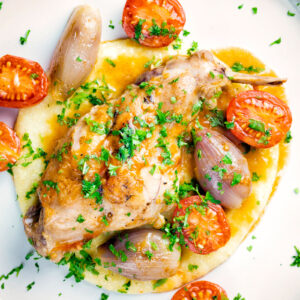
Rabbit Cacciatore Recipe or Coniglio alla Cacciatora
Ingredients
- 2 Rabbit Legs
- 1 tablespoon Flour
- 3 tablespoon Olive Oil
- 3 Anchovy Fillets
- 6 Small Echalion or Banana Shallots
- 6 Garlic Cloves
- 175 ml White Wine ¾ Cup
- 250 ml Chicken Stock 1 Cup
- 250 g Cherry Tomatoes 1⅓-1½ Cups
- ¼-½ teaspoon Salt
- ¼ teaspoon Pepper
Instructions
- Season the rabbit with salt and pepper, and then dredge it with the flour.
- Heat the olive oil in a deep 28cm or 11" skillet or frying pan (with a lid) over a medium heat. Add the rabbit legs and brown on both sides before removing.
- Add the anchovy fillets to the pan along with the peeled shallots. Cook for 5 minutes, stirring occasionally.
- Pour in the white wine and allow to reduce by ¾'s, scraping the bottom of the pan to loosen any residue.
- Return the rabbit to the pan and pour over the chicken stock.
- Crush the garlic cloves with the heel of your hand and add them to the pan.
- Chop half of the cherry tomatoes into two and add them with the bay leaf.
- Add a lid and place in the oven and 180°C or 350°F for 40 minutes.
- Take the pan out of the oven and remove the rabbit legs, and cover with foil.
- Reduce the cooking liquid by half, and then cut the remaining tomatoes in half and add those. Stir and cook for two minutes.
- Return the rabbit and coat it with the sauce before serving it with lots of fresh parsley.
I found this to be an excellent light meal, very easy to prepare, and attractive enough in the Dutch oven to bring to the table just like that rather than in a serving dish.
I used rabbit stock since I always have it in the freezer, and added some basil to the parsley at the end. A piece ripped from a baguette was perfect for mopping the plate at the end. I'd include a picture, but the comment section apparently doesn't allow for that.
Glad you enjoyed it Gina 🙂
Excellent recipe, easy to prepare and plates beautifully.